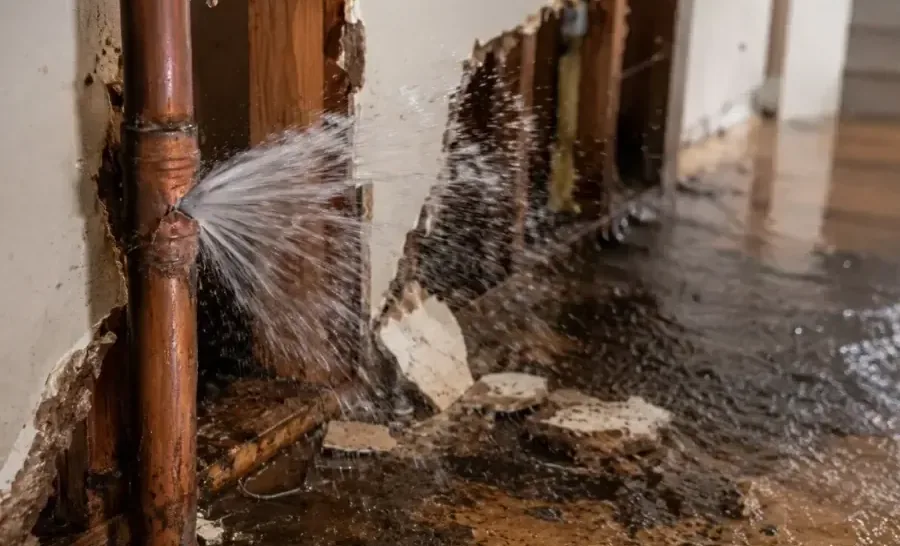
Appliance leaks rarely make a flood at first. A cracked ice maker supply, a dishwasher drain hose or a washer fill hose can drip for days under the floor covering or inside a cabinet before anyone sees a warped board or a soft spot.
The usual suspects
Rubber washer hoses age and burst, often while no one is home. Ice maker tubing behind a refrigerator cracks when the fridge is moved. Dishwasher drains and door seals leak under the cabinets. Hard water is common in the area, so many homes run a water softener in the basement, and its brine tank, bypass valve and drain connections can leak too.
- Washing machine fill and drain hoses
- Dishwasher supply, drain and door seals
- Refrigerator ice maker and water dispenser tubing
- Water softener brine tanks, valves and drains
Drying under cabinets and floors
Kitchens hide water under base cabinets and under vinyl plank or laminate. The tech who does the walkthrough uses meters under and around every cabinet, then the crew removes toe kicks and sometimes the cabinet bottoms to get air into the cavity. Hardwood can often be dried with drying mats that pull water up through the boards.
Category and the claim
Clean supply water is Category 1; a dishwasher or washer drain is usually Category 2. The drying team records the source, the readings and photos of the failed hose for the claim. EPA WaterSense covers checking for hidden household leaks, and the Minnesota Department of Health has guidance on home water and indoor air.