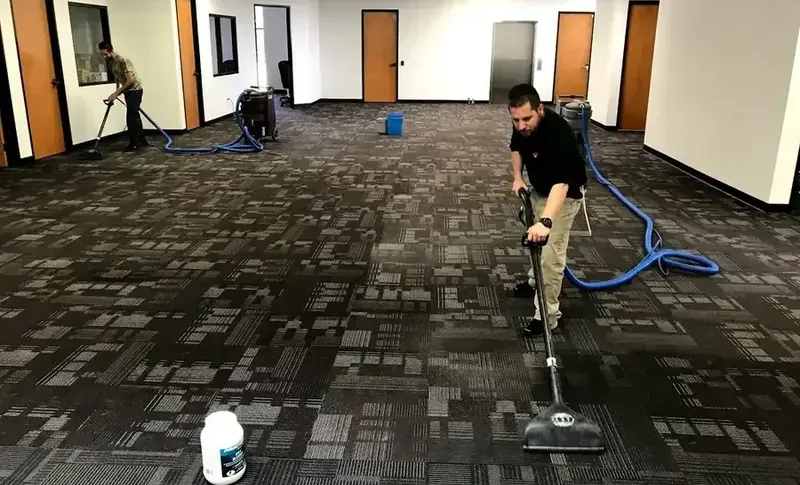
The city has a large commercial base: distribution and fulfillment buildings near US 169, light industrial parks, office space, retail along the main corridors and apartment complexes across town. Water damage in those buildings moves across big floors and through shared walls fast.
Common commercial water losses
Fire sprinkler heads freeze or get knocked off by equipment. Flat roofs collect snow and meltwater, and a blocked roof drain sends it through the ceiling. In apartments, a supply failure on an upper floor runs down into every unit below it.
- Sprinkler heads and pipes that freeze or break
- Roof drains and flat-roof leaks after heavy snow
- Supply and riser failures in multi-story buildings
- Restroom and break room plumbing failures
Phased drying to keep work moving
The commercial restoration crew plans the work around the business: drying one zone at a time, setting containment so the rest of the building stays open and running equipment overnight where noise matters during the day. Carpet tile can often be lifted, dried and relaid; gypsum walls in offices get flood cuts where readings say.
Documentation for owners and managers
Property managers and insurers want the same file: a moisture map, daily psychrometric logs, photos before demolition and an itemized scope by area. OSHA's flood cleanup guidance covers worker safety during cleanup, and FEMA's flood map pages show which properties sit in mapped flood zones.