Water Damage Restoration Chaska, MN
Burst pipes, failed sump pumps, sewage backups and river-valley seepage all reach Chaska homes. The drying team pulls out the water, opens wet walls and floors, and dries the structure to a measured finish.
(888) 432-4933Get a Carver County drying crew moving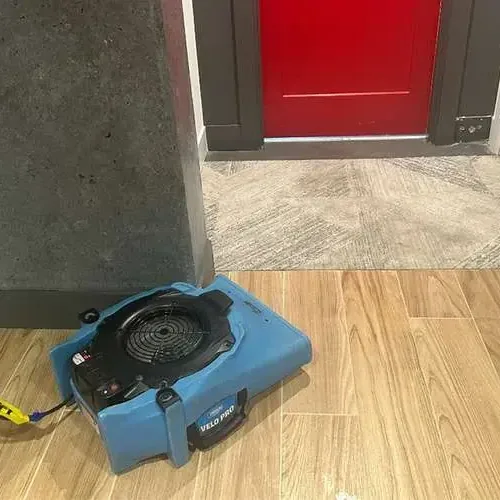
Photos and moisture logs go into every job file
Fourteen services for every kind of water
Pick the problem that matches your home and open its page for the full process, cost ranges and questions.
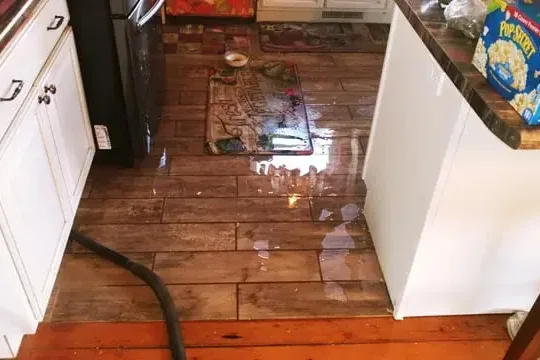 WD-01Water Extraction and RemovalPumps and truck-mounted units pull standing water from floors before walls drink it up.Open the service
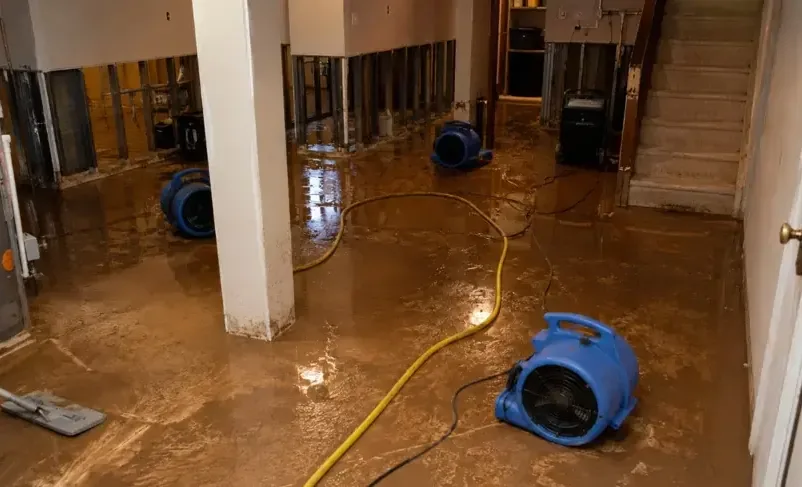 WD-02Basement Flooding CleanupLower levels get pumped out, stripped of wet finishes and dried until concrete reads dry.Open the service
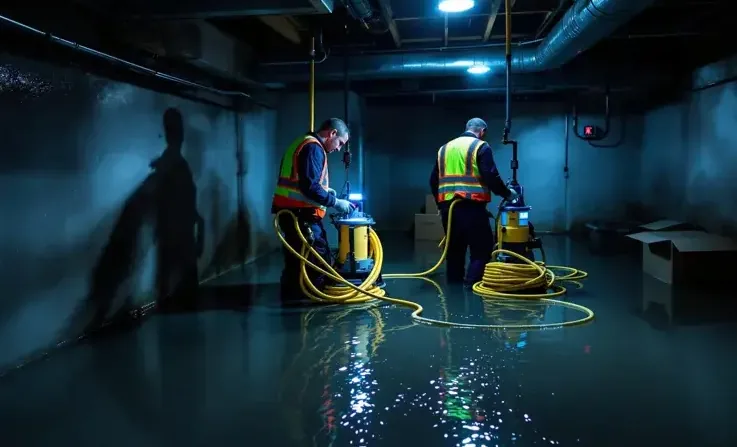 WD-03Sump Pump Failure CleanupGroundwater that a failed pump let in is removed, and the room dried.Open the service
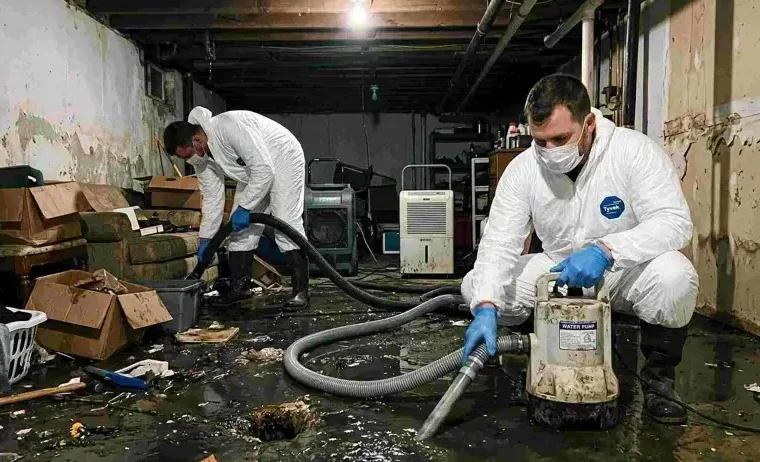 WD-04Sewage Backup CleanupContained removal and disinfection after a drain backs up into living space.Open the service
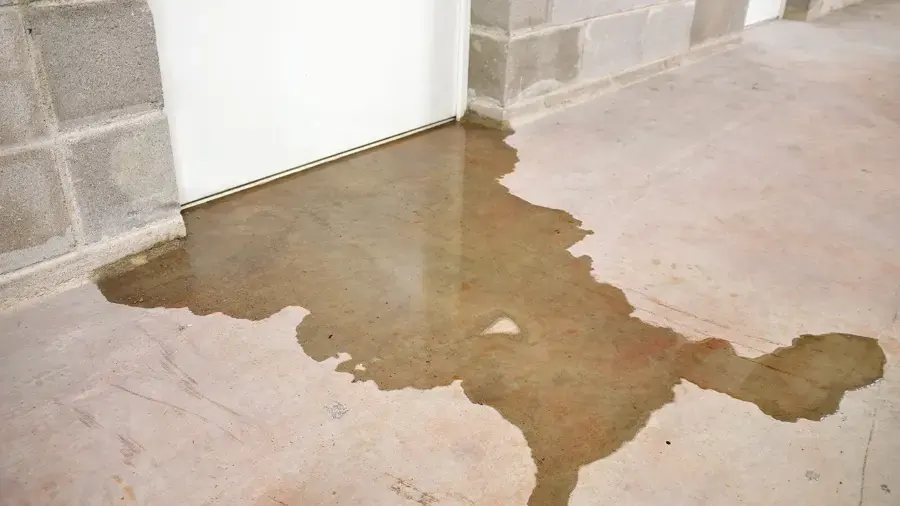 WD-05Snowmelt and Foundation SeepageThaw water working through foundation walls is traced, extracted and dried in place.Open the service
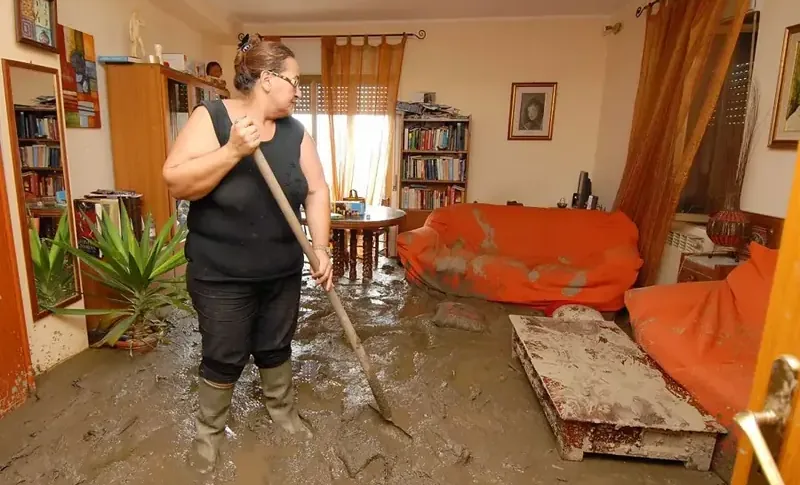 WD-06River and Flash Flood CleanupMud-out, pump-out and full drying after river or flash flood water enters.Open the service
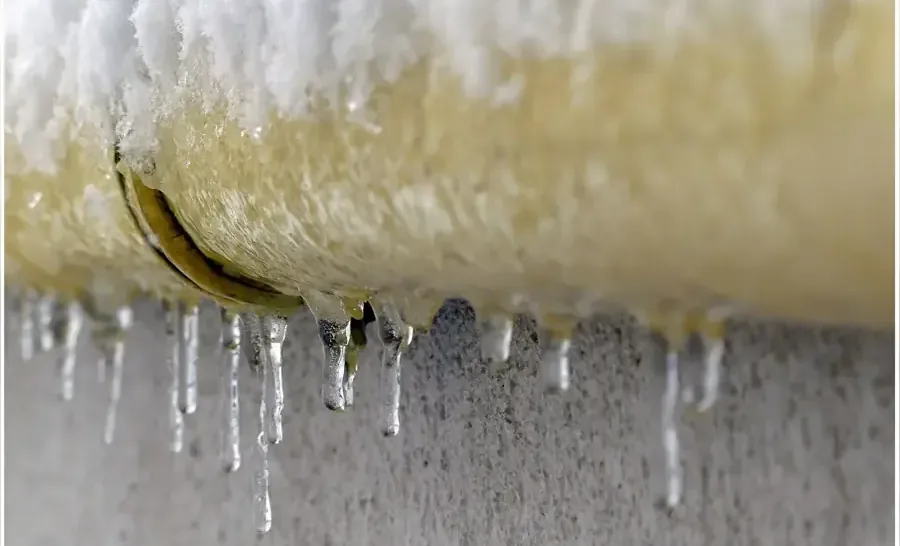 WD-07Frozen Pipe Water DamageThaw-day leaks from split pipes are stopped, extracted and dried inside the walls.Open the service
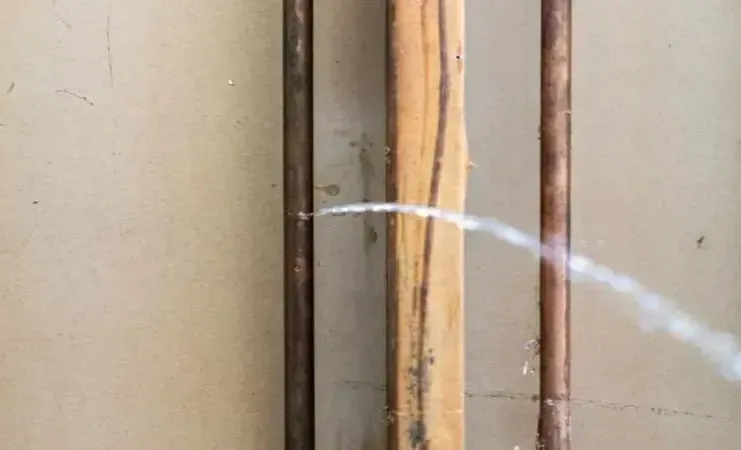 WD-08Burst Pipe Water DamageSudden supply pipe failures get extraction, ceiling checks and drying through every layer.Open the service
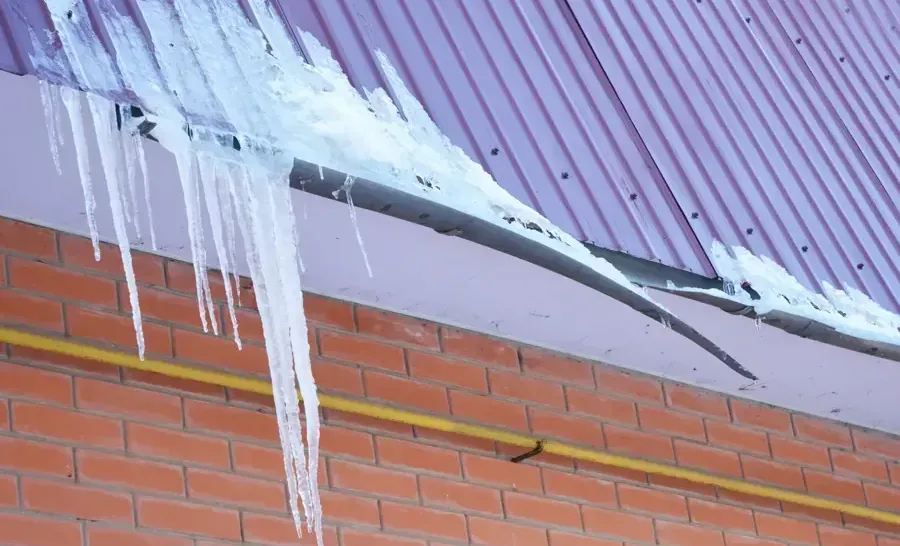 WD-09Ice Dam and Roof Leak Water DamageMeltwater that backs under shingles is dried out of attic insulation, ceilings and walls.Open the service
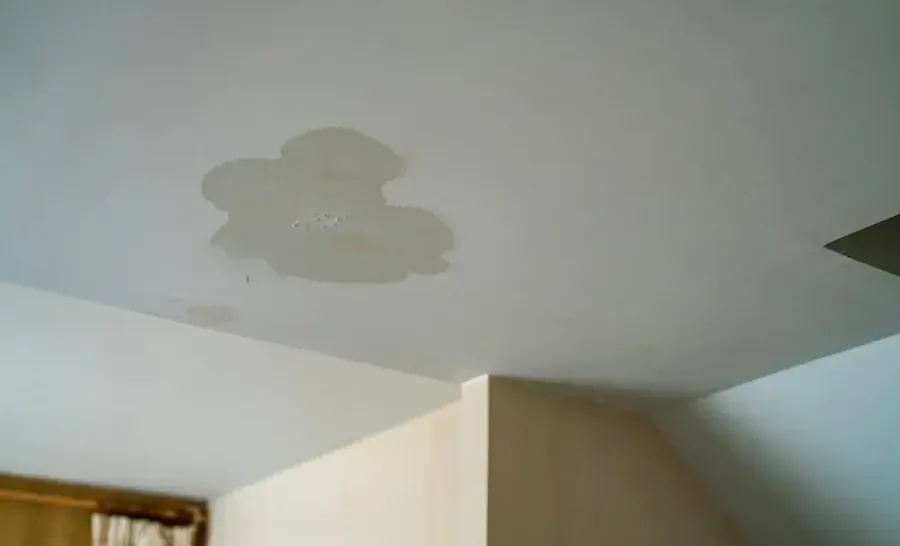 WD-10Ceiling Leak Water DamageStained or sagging ceilings are opened, dried and checked for hidden wet insulation.Open the service
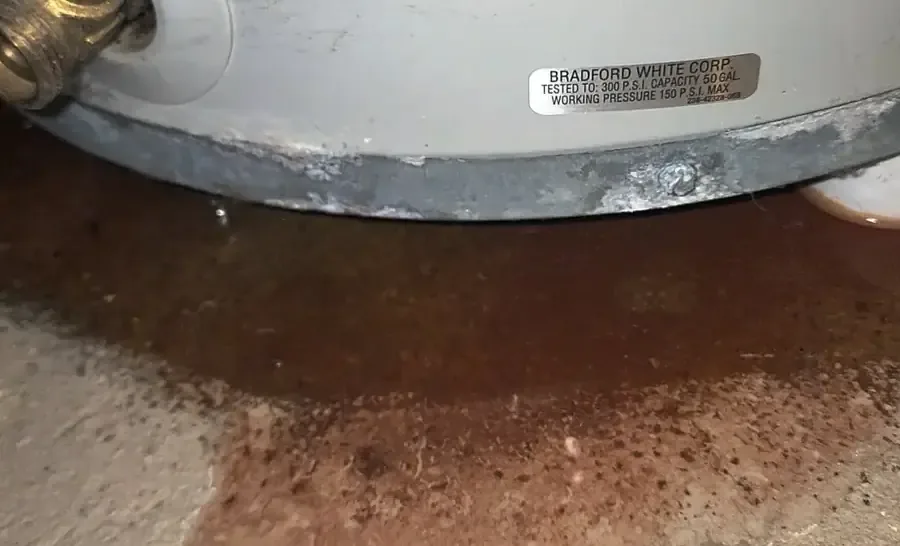 WD-11Water Heater Leak CleanupTank leaks and failed fittings are cleaned up and the surrounding rooms dried.Open the service
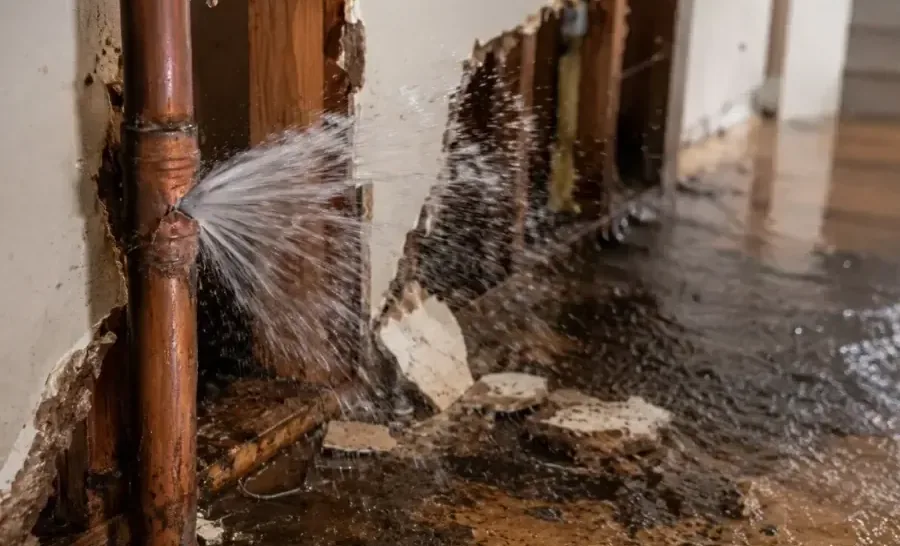 WD-12Appliance and Supply Hose LeaksWasher, dishwasher and softener leaks are dried out of floors, cabinets and wall bottoms.Open the service
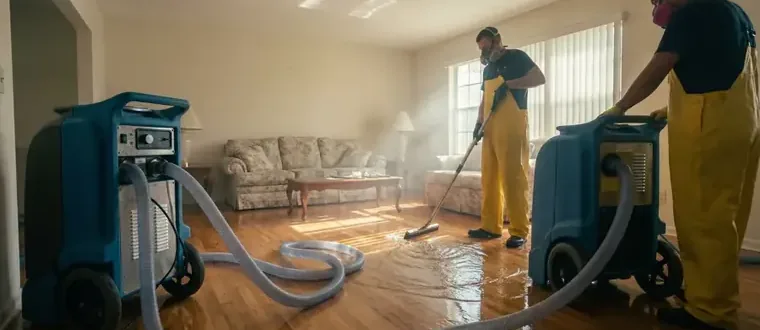 WD-13Structural Drying and DehumidificationDehumidifiers and air movers dry framing, subfloors and masonry to measured targets.Open the service
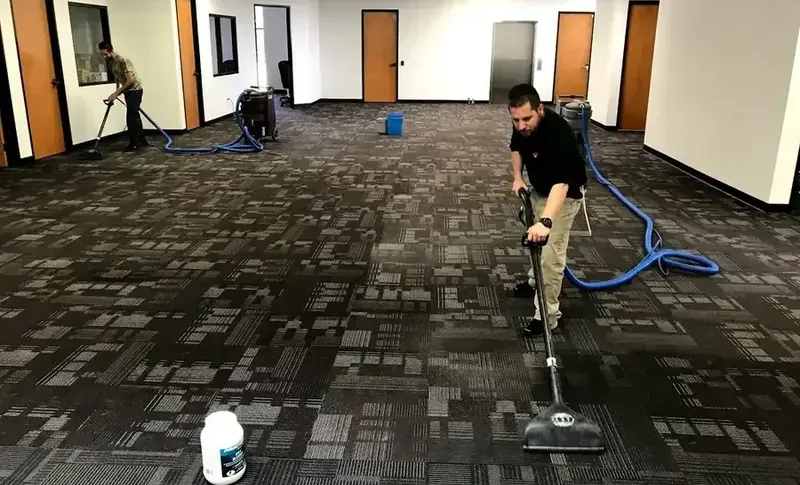 WD-14Commercial Water DamagePhased drying for shops, offices and larger buildings that must keep working.Open the service
What to do while the water is still spreading
A few calm actions in the opening stretch decide how much of the house has to be taken apart. Two situations come up most often in local homes.
Pipe or appliance leak
- Close the main shutoff and cut power to any room with wet outlets.
- Move rugs and small furniture out and photograph the damage first.
- Open cabinet doors, but leave wet walls closed until readings are taken.
Drain or sewage backup
- Stop using sinks, showers and toilets so no more waste reaches the floor.
- Keep children, pets and bare feet out of the room until it is sealed.
- Do not scoop or flush it away; leave removal to a crew in protective gear.
What sets local water work apart
Valley awareness
The crew expects groundwater, creek runoff and river water here, not only plumbing failures, and checks outside sources before blaming a pipe.
Strong extraction
Truck-mounted units and submersible pumps clear lower levels and wide rooms thoroughly before drying equipment goes in.
Logged proof
Moisture readings are recorded room by room, so the job file shows each material reaching its dry target.
Cold-season know-how
Heat, airflow and patience keep a basement from stalling through a long Minnesota winter.
How a water loss moves from wet to dry
- 01
Find the water
Meters and a thermal camera trace the wet path, including water that has slipped behind walls.
- 02
Remove it
Pumps and extraction units take the bulk water out first, because every gallon left behind has to be evaporated later.
- 03
Size the drying
Air movers and dehumidifiers are chosen by room volume and the materials that are wet.
- 04
Track progress
Readings repeat on a schedule, and equipment is moved or removed as each area dries.
- 05
Confirm it
Final readings must match the dry standard for each material before any finish is rebuilt over it.
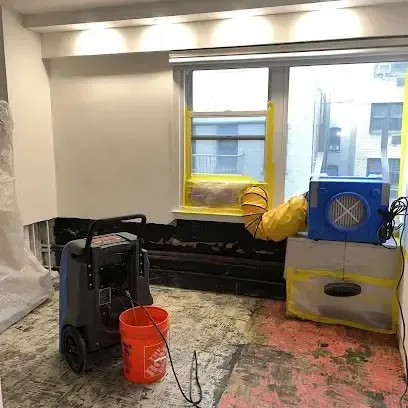
Why water behaves differently in this valley
Brickmaking in Chaska began in 1857, and by the 1880s the city was a thriving brick center. Older masonry buildings still cluster downtown near Walnut Street, while homes dating to the 1850s sit among the early neighborhoods around the historic core.
Water works differently in this setting. The Minnesota River valley forms the south edge of the city, two creek ravines run toward the river, and clayhole lakes left by the brick industry dot the map, so a wet floor can have an outside source as well as a broken pipe. That is why the crew reads moisture before choosing equipment, and why structural drying is sized room by room.
Read about structural dryingWhat the crew works to on every job
| Drying standard | IICRC S500 sets the targets for every wet material. |
|---|---|
| Water removal | Bulk water leaves first through pumps and truck-mounted extraction. |
| Daily checks | Moisture and humidity readings are logged at each visit. |
| Finish point | Materials must reach their dry goal before equipment comes out. |
| Sewage and floodwater | Category 3 water means contained removal and disinfecting. |
| Cool lower levels | Heat and dehumidification keep cold basements from stalling. |
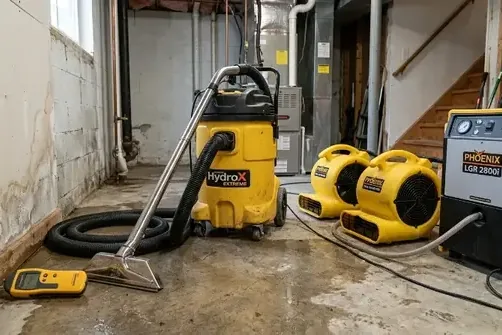
- Truck-mounted extraction units and submersible pumps for deep water
- Low-grain dehumidifiers matched to the volume of each room
- Axial and centrifugal air movers set along the wet walls
- Thermal imaging camera plus pin and pinless moisture meters
Records that an adjuster can read
Photos, moisture readings and equipment logs are kept together, so the story of the loss rests on records instead of memory, from the first visit to the final reading.
Policies treat sewer backup, groundwater and plumbing leaks differently, so the policy language and the agent decide what applies. The crew documents the damage either way and shares the file when the adjuster asks for it.
What water damage costs in Chaska homes
Most jobs here run from about $1,200 for a small clean leak to $15,000 or more when sewage or deep flooding reaches finished space. Room count, hours of standing water and the water category move the number more than anything else.
These ranges cover extraction, removal and drying only. Rebuilding is priced separately, and moisture mapping on site can move a job from one tier to the next once the hidden water is found.
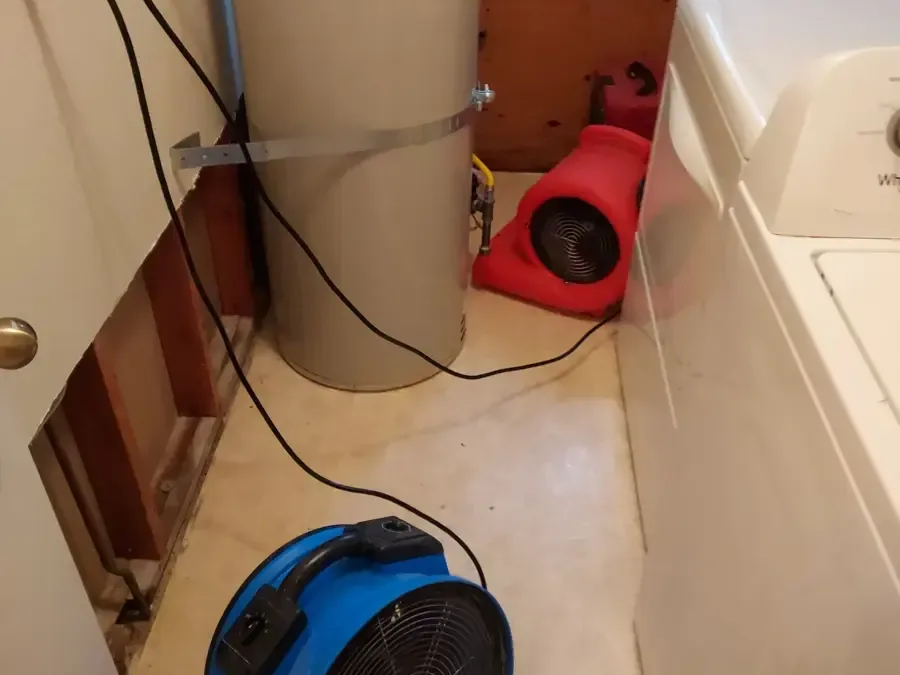
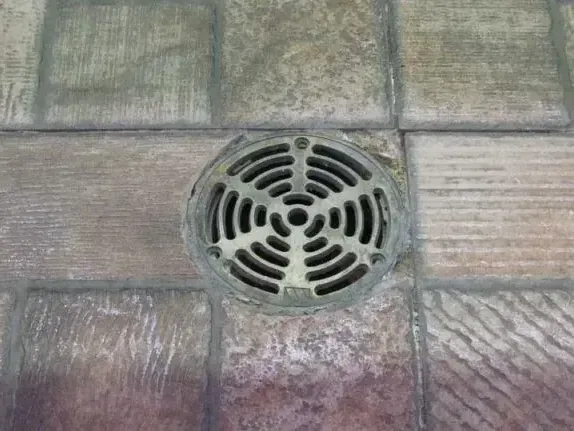
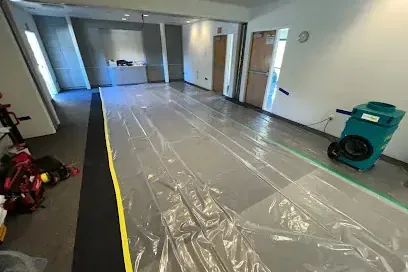
Typical drying setups from water losses
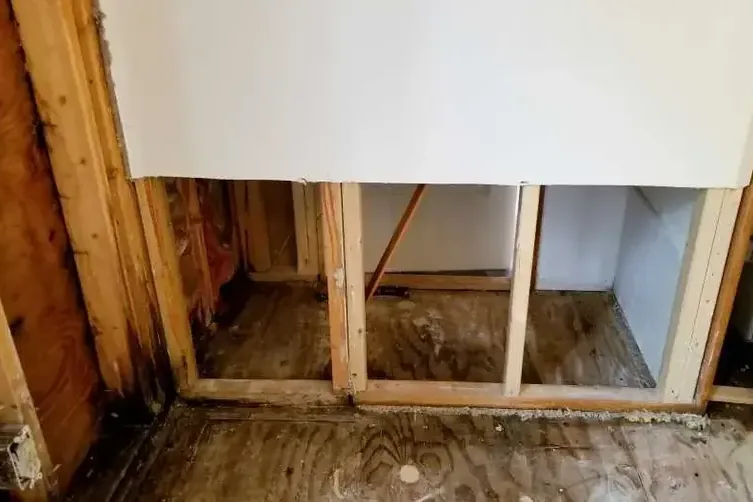
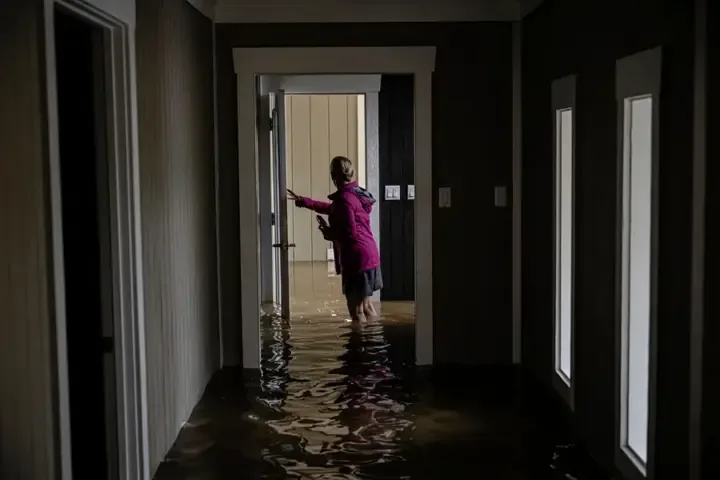
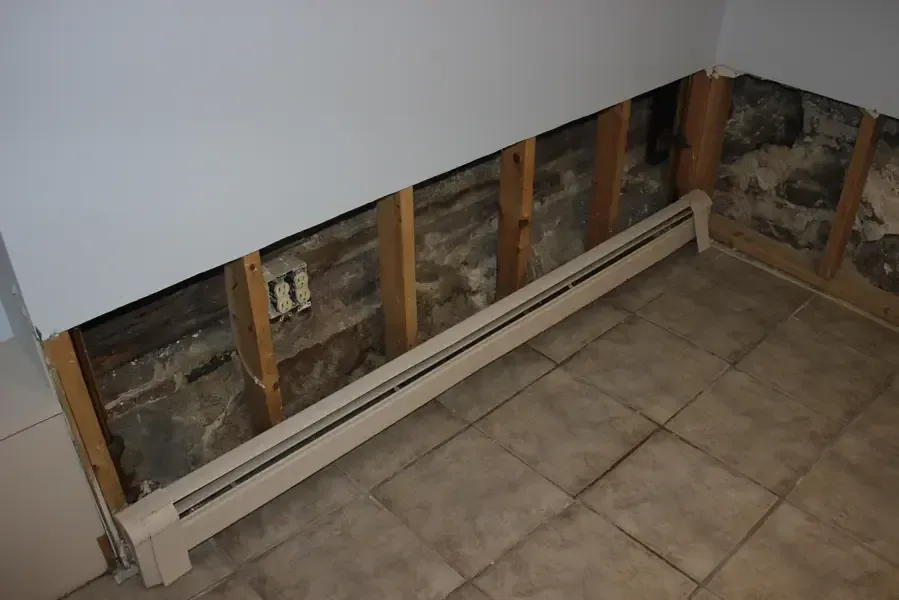
Equipment and cleanup scenes from water jobs, shown as examples and not tied to one address.
Three kinds of water, three kinds of work
Category 1, clean water
Supply pipe and appliance leaks start clean but get worse the longer materials stay wet.
Burst pipe cleanupCategory 2, gray water
Groundwater and failed sump pumps bring dirt and bacteria, so wet porous materials usually go.
Sump pump failure cleanupCategory 3, sewage
Backups and flood water carry contamination and need containment, removal and disinfecting.
Sewage backup cleanupNeighborhoods the crew covers in Chaska
The crew works across the city, from brick blocks downtown to the lake neighborhoods and newer subdivisions.
Every address in ZIP 55318 sits inside the working area, including the older streets near the river bluff and the newer neighborhoods around the lakes.
Downtown and the river
ZIP 55318
The brickyard district
ZIP 55318
Jonathan and Clover Ridge
ZIP 55318
Lake neighborhoods
ZIP 55318
Next door
Nearby
Water removal that starts with one call
Water does not keep business hours, so the crew works nights, weekends and holidays across Chaska and the rest of Carver County.
Chaska's river history and what it means
Dated events from the valley explain why outside water belongs on the list beside plumbing failures.
- The April 1965 crest The Minnesota River crested at 34.25 feet on April 12, 1965, a record high. Water rose above the second floors of many homes, and 242 homes and 14 commercial buildings were damaged.
- The 1998 levee A flood control project finished in 1998 added a levee and a creek channel diversion in the lower part of town, and floodplain limits on rebuilding homes were lifted.
- Highway 41 closures Spring flooding closed the Highway 41 river crossing in March 2011, and MnDOT shut it again on June 20, 2024, planning a July 22 reopening after repairs.
- Creek ravines Two creek ravines drain toward the Minnesota River, so storm runoff and spring melt have more than one path toward a foundation.
- Thaw after a deep freeze A city bulletin describes crews visiting several homes with burst pipes when a deep freeze gave way to a thaw.
Chaska water damage questions
What should happen first when water is spreading?
Stop the source if it is safe to, cut power to wet rooms and photograph the damage. Then call a crew before pulling up materials, because early moisture readings show how far the water actually travelled.
How does the crew tell pipe water from groundwater?
Moisture mapping follows the wet pattern. Water from a pipe usually starts at a fixture or wall and spreads outward, while groundwater tends to show along the foundation and the lowest floor first.
Why does the sump pump discharge matter?
The city says groundwater from a sump pump cannot be pumped into the sanitary sewer, so owners should confirm the discharge pipe is hooked up correctly. A failed or misrouted pump is a common reason a lower level gets wet. See sump pump failure cleanup.
What does a sewage backup call for?
Contained removal of everything the water touched, then disinfecting and drying. The city jets its sewer mains once every three years, but a blockage can still form anywhere between a house and the main, so the cause gets checked. Sewage backup cleanup lays out the steps.
Can the water meter help find a hidden leak?
Meters here are usually inside the home and read remotely, and the city's system flags water use on four consecutive days. The city also suggests checking the meter before and after two hours with no water use.
Does replacing a water heater need a permit?
Yes. The city requires a plumbing permit for any installation, alteration or repair of a plumbing system, including a water heater, softener or fixture, and applications go through its SmartGov portal.
How soon does mold become a concern?
Wet drywall, carpet pad and framing can support mold in the 24 to 48 hours after they get wet, which is why drying starts at once and why readings, not appearance, decide when it is safe to stop.
How are older brick buildings dried?
Brick and other dense masonry hold water longer than drywall, so the plan leans on steady drying and repeated readings rather than a set number of days.
Do apartments and condos need a different plan?
Often yes, because water travels between units. A 2007 city plan estimate counted 2,104 apartment and condominium units, so a leak from the unit above is a regular way for ceilings to get wet. Ceiling leak water damage covers that path.
Stop the spread before it sets in
Extraction and drying are ready for Carver County homes at any hour, in any season.