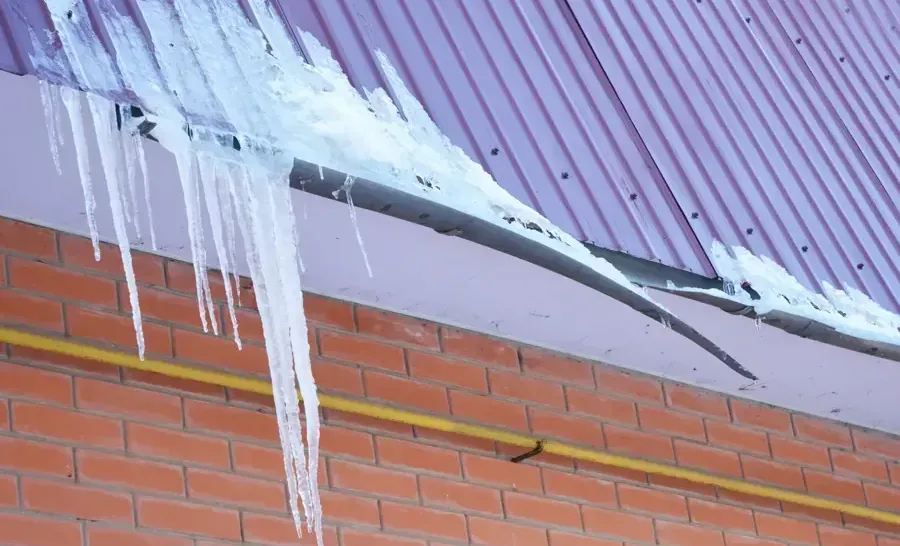
Ice dams form when snow melts on a warm roof and refreezes at the cold edge, trapping meltwater behind a ridge of ice. That water backs up under the shingles and finds its way into the attic, the ceiling and the top of the walls.
How the water gets in
Shingles shed water downhill, not uphill, so water held behind the ice slips under them and drips onto the insulation. It soaks in quietly, and the first sign inside the house is often a ceiling stain after a thaw.
- Wet attic insulation loses its insulating value and holds water against the ceiling
- Ceiling drywall stains, bubbles or sags below the leak
- Exterior wall cavities can take on water where it runs down
Dry the house, then fix the roof
Drying removes the water already inside, but it does not stop the next leak. Roof repair, attic ventilation and insulation belong to a roofer, and the crew helps by documenting exactly where the water entered and how far it traveled. That record also helps the roofer work in the right spot.
Drying in winter conditions
Cold weather slows drying, so heat and dehumidifiers matter more in winter. Wet insulation is pulled from the attic, ceilings are opened where staining shows and the cavity is dried through access holes. The same methods described under structural drying apply.