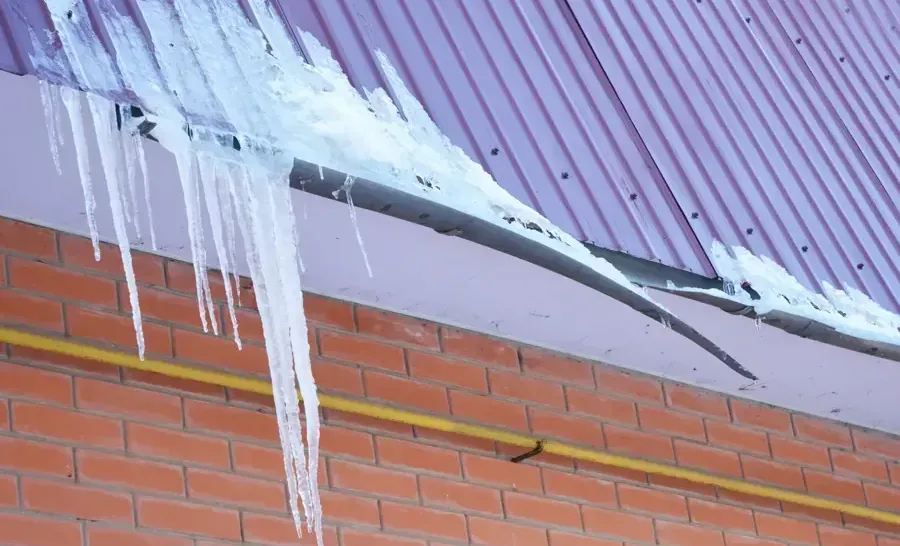
Ice dams form when snow melts on a warm roof and refreezes at the cold edge, trapping a pool behind it. In Victoria that water has nowhere to go but under the shingles and into the house. Insulation that stays wet loses its value as a thermal barrier, which feeds the next dam.
Heavy snow years
The Twin Cities counted more than 20 inches of January snow in 2023, 2018 and 2014, and years like those leave thick snowpack and long, slow thaws. Homes with attics, vaulted ceilings or finished rooms under the roof give meltwater more places to travel.
- Wet attic insulation removed so it stops holding water
- Ceiling drywall opened where it is soaked or sagging
- Wall cavities below the roof edge checked and dried
Roof edge to wall base
Water that gets in at the eaves does not stay there. It runs down inside the exterior wall, wets the top plate and insulation, and may reach the floor of a room below. A thermal camera follows that path so the openings stay small. Bubbled paint, brown rings and damp carpet at the wall are common clues.
The roof fix is separate
Drying a ceiling does not stop the next leak. A roofer deals with the ice, flashing and ventilation, while the restoration crew documents moisture readings for the claim. See ceiling leak water damage for what happens indoors.