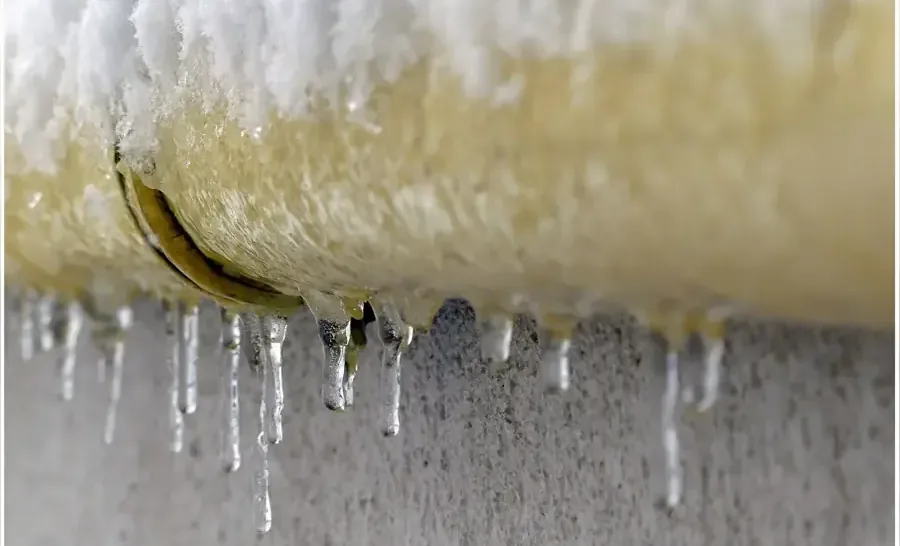
A frozen pipe can sit split for days without any sign, then release water the moment it thaws. In Victoria the damage is usually inside a wall or above a ceiling, where it spreads out of sight.
Freezes happen in homes of any age
Minnesota winters can freeze unprotected pipes in any house, new or old. The median home in the city was built in 2006, and a pipe on a cold exterior wall, in a garage or near an attic hatch is just as exposed in a newer build as in the roughly 585 housing units that predate 1980.
- Water extracted from floors and cavities below the split
- Wet insulation removed and walls opened where readings call for it
- Ceiling below checked and dried as a second level
Shutting the water off first
The first move is the main shutoff, then a plumber to repair the split. The restoration crew works after that, because drying cannot hold while a pipe still leaks. Opening cabinet doors and warming the room slowly help a little but do not replace readings. Insulation behind a split can hold water long after the drywall looks dry, and that hidden path is why readings matter.
When ceilings are involved
Water from an upstairs wall or attic pipe often lands in the ceiling below. Drywall that sags or stains is cut open so insulation and joists can dry. Ceiling leak water damage covers that case in detail.