Measured drying of walls, floors and framing

Structural Drying in Victoria, MN

Structural drying starts once the visible water is gone. Air movers, dehumidifiers and daily readings pull moisture out of framing, subfloor and drywall until each material hits its dry target.

(888) 432-4933Get drying equipment set up
LGR dehumidifiers Daily moisture readings Psychrometric logs
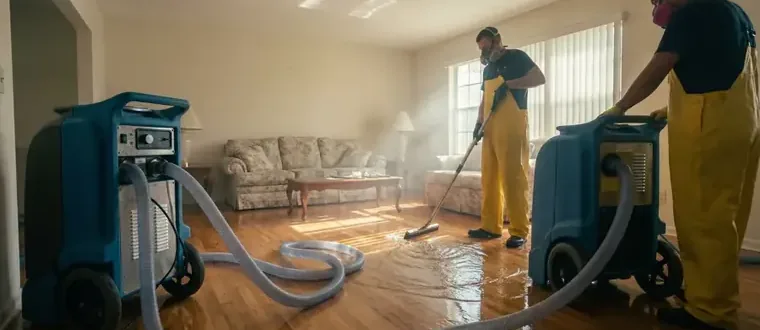
Victoria structural drying: air movers and a dehumidifier working in a room
Classes1 to 4, by material
EquipmentLGR units, air movers
RecordsReadings logged each visit
FinishDry standard, not a date
Right now

First steps for structural drying and dehumidification

  1. Open the space

    Open closet and cabinet doors so wet cavities can breathe.

  2. Hold off on paint

    Do not paint, seal or install flooring until readings say the structure is dry.

  3. Leave equipment on

    Switching units off lets moisture drift back into walls and floors.

  4. Save the logs

    Keep the daily reading sheets for the insurer and the rebuilder.

Trade facts
Loss class1 to 4, by material
EquipmentLGR dehumidifiers and air movers
TargetsDry reading from an unaffected area
RecordsPsychrometric log at each visit
The standard

How structural drying and dehumidification is held to the drying standard

Rapid local response

Active water is treated as urgent at any hour, because it keeps wicking into drywall, pad and framing after dark.

IICRC S500 drying standard

Structural drying, not just surface drying, with equipment sized to the class of the loss.

Claim-ready documentation

A moisture map, daily psychrometric readings and timestamped photos taken before any demolition.

Cold-climate know-how

Basements, frozen pipes, ice dams and spring thaw water are everyday work in the Minnesota River valley.

Typical cost ranges

What does structural drying and dehumidification cost in Victoria, MN?

Drying alone usually runs from $1,000 for one or two rooms to $8,000 or more for dense materials and long equipment runs here. Room count, class and how long the equipment stays decide the total.

Class 1 or 2, single area

$1,000 to $2,500
  • Air movers
  • One LGR dehumidifier
  • Readings each day

A few rooms or one level

$2,500 to $5,000
  • Several LGR dehumidifiers
  • Wall and floor drying
  • Psychrometric charts

Class 4, hardwood and concrete

$5,000 to $8,000+
  • Desiccant units
  • Mats or heat on wood
  • Long monitoring

Ranges are typical, not a quote. The water category, the square footage that got wet, the material class and how fast drying started move the number most. For a planning range, run the water damage cost calculator.

The process

The structural drying and dehumidification process, in order

The order matters: moisture mapping comes before equipment, and equipment stays until the readings say dry, not until it looks dry.

  1. 01

    Measure

    Meters and a thermal camera map the wet and dry zones.

  2. 02

    Set equipment

    Air movers and dehumidifiers are placed to match the room volume.

  3. 03

    Monitor

    Readings are logged and units are moved as zones dry.

  4. 04

    Verify

    Equipment leaves only when each material meets its target.

Structural drying is the part of a water loss that happens after the visible water is gone. It decides whether framing, subfloor and drywall return to normal or hold moisture for weeks.

Why surface water is only half the loss

A 2015 Minnehaha Creek Watershed District study found that five of the 16 Lake Zumbra properties hit in 2014 had water above the lowest opening, which means walls and framing were involved and not only the floor. When water climbs into a wall, wicking carries it higher than the stain, and only meters or a thermal camera show how far.

  • Low-grain dehumidifiers pull moisture out of the air
  • Air movers push dry air across floors and wall bottoms
  • Heat or desiccant units handle dense or cold materials

How drying classes work

The IICRC S500 groups losses into classes by how much moisture materials absorbed. Class 1 and 2 jobs involve little or moderate wet material, while Class 4 means dense items such as hardwood, plaster or concrete that hold water deeply and need slower, targeted drying in Victoria homes just as anywhere.

Proof that drying is finished

Readings are taken on the same spots at each visit and compared with a dry sample from an unaffected area. Equipment comes off only when every wet material meets that target, and the log then goes into the claim file for the adjuster and the rebuild. See water extraction for what comes before drying and basement flooding cleanup for lower-level losses.

Service area

Structural drying and dehumidification across Victoria and nearby towns

Service area map

Drying crews work across the whole city, from older homes near Stieger Lake and the park-side downtown to newer streets such as Huntersbrook, Brookmoore and West Creek Village, plus Downtown West, covering ZIP 55386.

The same service nearby: structural drying and dehumidification in Shakopee, Chaska, Chanhassen.

Water damage restoration in Victoria · every town covered

Questions

Structural Drying and Dehumidification questions in Victoria, MN

How long does structural drying take?

Most jobs need several days of equipment, and dense materials such as hardwood, concrete or thick framing can take longer. Readings decide the end date.

Why are so many machines needed?

Air movers push moisture off surfaces and dehumidifiers remove it from the air. Without both, the humidity stays high and the structure dries slowly.

Is the noise normal?

Yes. Air movers and dehumidifiers run steadily for the whole job, and shutting them off early can leave hidden moisture behind.

Can hardwood floors be dried instead of replaced?

Sometimes. Mats, heat and long equipment runs can save solid hardwood when it is caught early, though cupping often means replacement.

How does the crew prove the structure is dry?

Daily meter readings are compared with a dry sample from an unaffected area, and the log shows each material reaching that number.

What happens if drying is skipped?

Moisture stays in framing and subfloor, and mold can start growing in 24 to 48 hours. Odor, warping and finish failure follow.

24/7 water removal

Dry on top does not mean dry inside.

Describe what flooded and how long it sat, and the crew maps moisture and chooses the dehumidifiers and air movers.

(888) 432-4933Request structural drying
Call (888) 432-4933 24/7