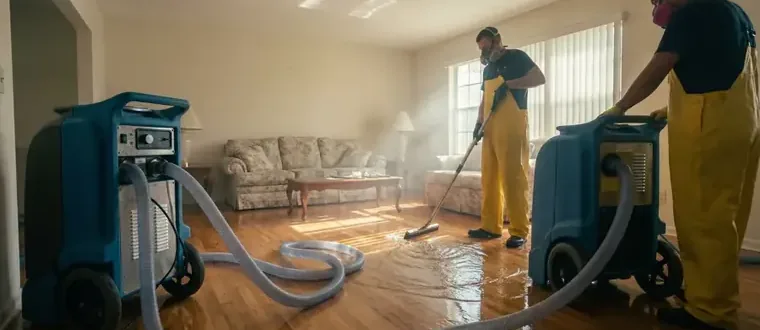
Structural drying is the part of a water loss that decides whether the problem comes back. The IICRC S500 standard treats drying as measured work: find the wet materials, set the right equipment, read the moisture every day and stop only when the materials reach a dry goal.
Class of loss sets the equipment
Class 1 is a small area with little absorption. Class 2 is a whole room with wet carpet and wall bottoms. Class 3 means water came from above and soaked ceilings and walls. Class 4 is dense material such as hardwood, plaster or concrete that holds water tightly and needs special drying.
- Air movers set to each room's evaporation load
- LGR dehumidifiers for most rooms
- Desiccant dehumidifiers for cold basements and Class 4
- Drying mats for hardwood, heat for cold slabs
Drying in a cold climate
Lower levels here are cool for much of the year, and a refrigerant dehumidifier loses efficiency in cool air. The drying team adds heat or swaps in a desiccant unit when readings stall. In winter the outside air is very dry, so the plan also keeps the rest of the house heated and closed off from the drying area.
Readings decide when it is done
Each day the tech logs temperature, relative humidity and grains per pound in the room and the moisture content of the wet materials. The drying goal is within 2 to 4 points of a dry reference material in the same house. The EPA mold guidance explains the 24 to 48 hour window for drying, and the EPA indoor air quality pages cover why damp materials affect the air indoors.