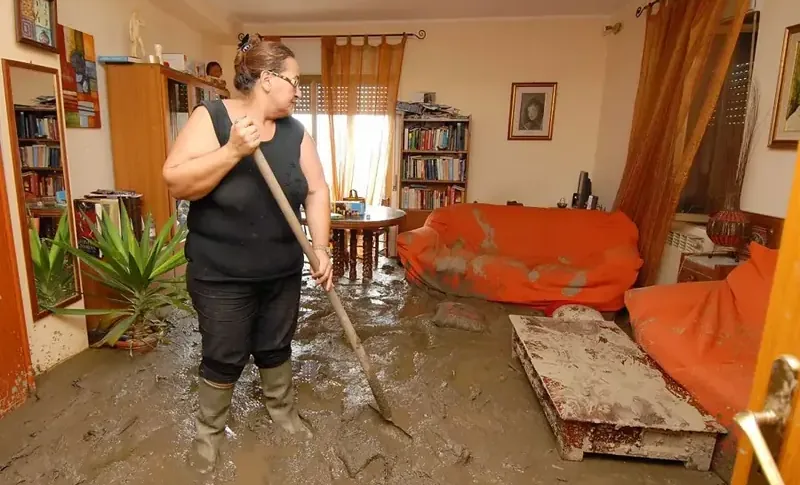
The city sits on the south bank of the Minnesota River. The river crested at record levels in April 1965 and ran high again in 2001 and 2014, and the riverfront parks and low ground near downtown are in its floodplain. Away from the river, summer cloudbursts can drop several inches in a few hours and send runoff into window wells, garages and walkout basements.
Why floodwater is always Category 3
Water that crossed lawns, streets and fields picks up soil, fertilizer, fuel and sewage. The IICRC S500 standard treats it as Category 3, the same as a sewer backup. Porous materials it touched, such as carpet, pad, drywall, insulation and particleboard furniture, are removed rather than dried.
- River high water in low areas near downtown
- Flash flooding from summer thunderstorms
- Runoff into window wells and walkout doors
- Overloaded storm drains backing into low lots
The flood cleanup sequence
The flood cleanup crew pumps out standing water and shovels out mud and silt first. Wet materials come out to above the high-water mark. Studs, slab and hard surfaces are cleaned and treated with an EPA-registered antimicrobial, then the structure is dried with LGR dehumidifiers and air movers, often with heat in a cool spring.
Before and after the water
Check whether a property sits in a mapped flood zone on the FEMA flood map pages. Flood damage is not covered by a standard homeowners policy; the National Flood Insurance Program site explains flood coverage and waiting periods.