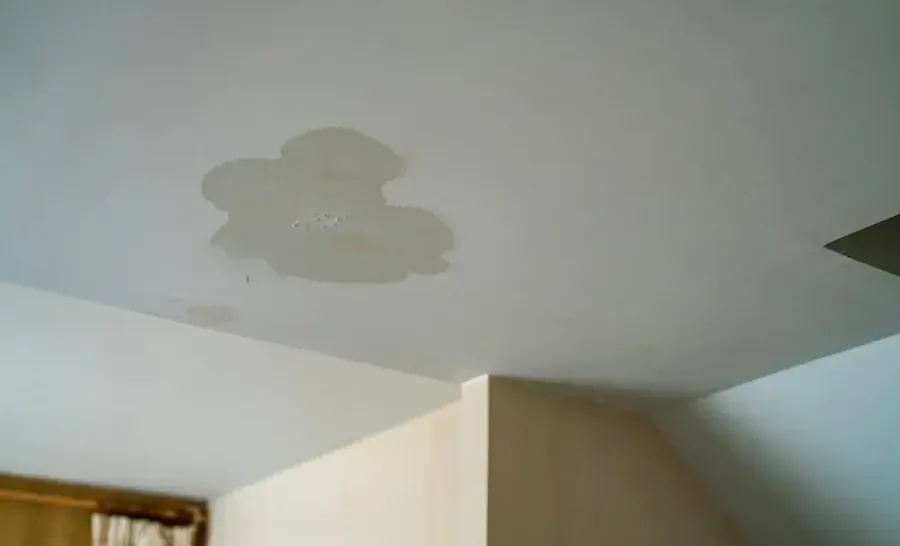
Ceiling leaks inside the house almost always come from the floor above: a shower pan or tub drain, a toilet seal or supply, a vanity drain, a dishwasher or a laundry room on the second floor. The water runs along the joists before it shows, so the stain is often a few feet from the leak.
Interior sources, not the roof
This page covers leaks from plumbing and fixtures inside the house. Roof and ice dam leaks come through the attic and are covered on the ice dam page. Telling the two apart matters: an interior leak usually means a plumber, while a roof leak means a roofer.
- Shower pans, tub drains and failed grout or caulk
- Toilet wax seals and supply connections
- Upstairs laundry and washer hoses
- Condensate from an attic or upstairs air handler
Sagging drywall and light fixtures
A ceiling holding water is heavy and can fall without warning. Water near recessed lights, ceiling fans and junction boxes is an electrical hazard, so power to that circuit goes off before anyone works below it. The crew drains a bulging section into a container, then removes the wet drywall and any insulation in the bay.
Drying the joist bay
With the ceiling open, air movers and a dehumidifier dry the joists and the underside of the subfloor above. Where the ceiling stayed sound, small access holes let air into the bay so it dries in place. The EPA indoor air quality pages explain why damp building materials matter for the air in a home, and EPA WaterSense covers checking toilets and fixtures for leaks.