Deep-freeze pipe splits

Frozen Pipe Water Damage in Shakopee, MN

A frozen pipe often leaks only when it thaws, sometimes days after the cold snap. The restoration crew extracts the water, opens the wall or ceiling where it ran and dries the cavity before insulation and framing stay wet.

(888) 432-4933Pipe split in the cold? Call for the dry-out
Thermal imaging on cold walls Insulation and drywall out Cavity drying
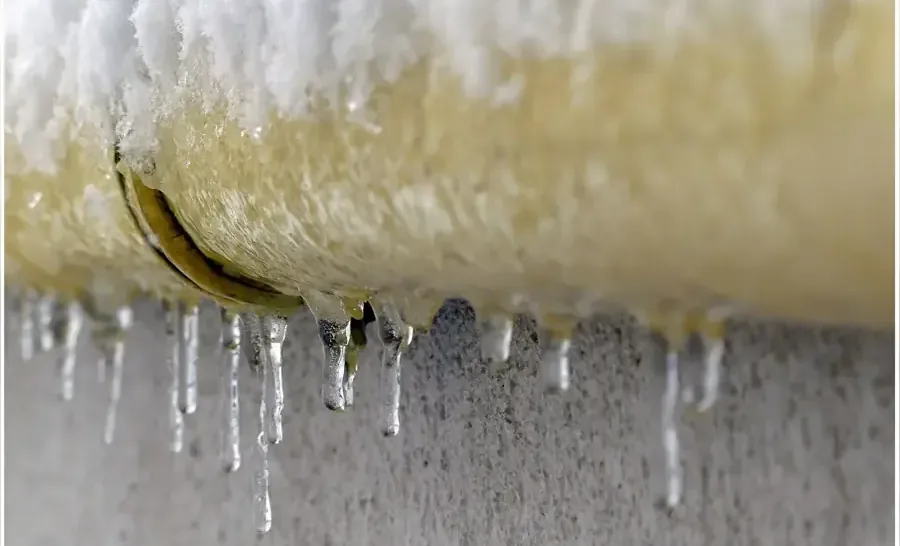
Icicles hanging from a split pipe after a hard freeze
Water category1 (clean supply)
Class of lossOften 2 or 3
Typical drying3 to 5 days
Drying standardIICRC S500
Right now

First steps for frozen pipe water damage

  1. Shut off the main

    Close the main valve the moment water appears, or before thawing a frozen pipe.

  2. Kill nearby power

    Switch off circuits near the leak if the panel is dry.

  3. Open the faucets

    Let thawing pipes drain once the main is off.

  4. Never use an open flame

    Thaw only with gentle heat such as a hair dryer.

Trade facts
Water category1, clean supply water
Common locationsRim joists, outside walls, garages
Usual removalWet insulation, cavity drywall
Drying goal2 to 4 points of a dry reference
The standard

How frozen pipe water damage is held to the drying standard

Rapid local response

Active water is treated as urgent at any hour, because it keeps wicking into drywall, pad and framing after dark.

IICRC S500 drying standard

Structural drying, not just surface drying, with equipment sized to the class of the loss.

Claim-ready documentation

A moisture map, daily psychrometric readings and timestamped photos taken before any demolition.

Cold-climate know-how

Basements, frozen pipes, ice dams and spring thaw water are everyday work in the Minnesota River valley.

Typical cost ranges

What does frozen pipe water damage cost in Shakopee, MN?

In Shakopee, MN, frozen pipe water damage restoration typically runs $1,500 to $10,000 depending on how long the pipe ran, how many floors the water passed through and how much insulation and drywall soaked. The pipe repair is a separate plumbing cost.

One wall cavity

$1,500 to $3,000
  • Extraction
  • Insulation out
  • Cavity drying

Ceiling and floor below

$3,000 to $6,500
  • Ceiling opened
  • Carpet and pad
  • Two-level drying

Long run, several rooms

$6,500 to $10,000+
  • Multi-room removal
  • Lower-level drying
  • Extended monitoring

Ranges are typical, not a quote. The water category, the square footage that got wet, the material class and how fast drying started move the number most. For a planning range, run the water damage cost calculator.

The process

The frozen pipe water damage process, in order

The order matters: moisture mapping comes before equipment, and equipment stays until the readings say dry, not until it looks dry.

  1. 01

    Find the wet cavity

    Thermal imaging and meters along the wall and ceiling.

  2. 02

    Remove wet insulation

    Soaked fiberglass and drywall come out.

  3. 03

    Dry the framing

    LGR dehumidifiers and directed air into the cavity.

  4. 04

    Verify

    Daily readings until studs and plates match a dry reference.

January cold snaps here regularly push nights well below zero. Pipes in outside walls, in a rim joist above the foundation, under a kitchen sink on an exterior wall or in an attached garage freeze first. Ice expands, the pipe splits, and the water stays trapped until the thaw, then pours out at full house pressure.

Where pipes freeze in local homes

Split-levels and two-stories often run supply pipe through the rim joist area or along a garage wall. Bonus rooms over garages, three-season porches and hose bibs with a shutoff left open are common trouble spots. In older homes near downtown, pipes in uninsulated crawl spaces and exterior walls freeze more easily.

  • Rim joists and band boards above the foundation
  • Kitchen and bath sinks on outside walls
  • Pipes in attached garages and over garage ceilings
  • Outdoor faucets that were not drained in fall

Why the wall has to be opened

Water from a split pipe runs down inside the wall and soaks the fiberglass insulation, which holds water against the framing for weeks. The tech who does the walkthrough uses thermal imaging and meters to find the wet cavity, then the crew removes the wet insulation and enough drywall to dry the studs and plates. Dried in place, a soaked cavity stays wet.

Drying in winter

Cold air holds little moisture, which helps drying, but cold framing dries slowly. The drying team runs LGR dehumidifiers and air movers and keeps the house heated until readings reach the goal. Ready.gov's winter weather page and the National Weather Service cold safety page cover keeping pipes and people safe in extreme cold.

Service area

Frozen pipe water damage across Shakopee and the river valley

ZIP 55379 and the river valley around it

The restoration crew covers ZIP 55379 end to end: downtown and the First Avenue riverfront, the 10th Avenue and Vierling Drive neighborhoods, Stonebrooke and Quarry Lake to the south, and Southbridge, Dean Lakes and Eagle Creek Boulevard to the east.

The same crews reach Prior Lake, Savage, Chanhassen, Chaska, Eden Prairie, Jordan, Victoria and Credit River.

Every neighborhood and nearby town

Questions

Frozen Pipe Water Damage questions in Shakopee, MN

Why did the pipe leak days after the cold snap?

The ice inside the split pipe holds the water back. When the pipe thaws, water flows out at full pressure.

Is frozen pipe damage covered by insurance?

Sudden water from a burst pipe is often covered, but policies may exclude freezing in a vacant or unheated home. Coverage depends on your policy, so it is worth checking with your own insurer.

Does all the insulation have to come out?

Insulation that soaked usually does, because fiberglass holds water against the framing. Dry sections can stay.

How do I keep pipes from freezing again?

Keep the heat on, open sink cabinets on outside walls during cold snaps, drain outdoor faucets in fall and ask a plumber about rerouting pipes out of cold spaces.

Can the ceiling below be saved?

Sometimes. A ceiling that sagged or soaked usually comes down; one with a small stain may dry with access holes.

How long does drying take?

Usually three to five days once the wet insulation and drywall are removed.

24/7 water removal

Pipe burst after the cold snap? Call for the dry-out now.

A thawed split pipe can run for hours. Wet insulation holds that water against the framing until it is removed.

(888) 432-4933Frozen pipe help, day or night
Call (888) 432-4933 24/7