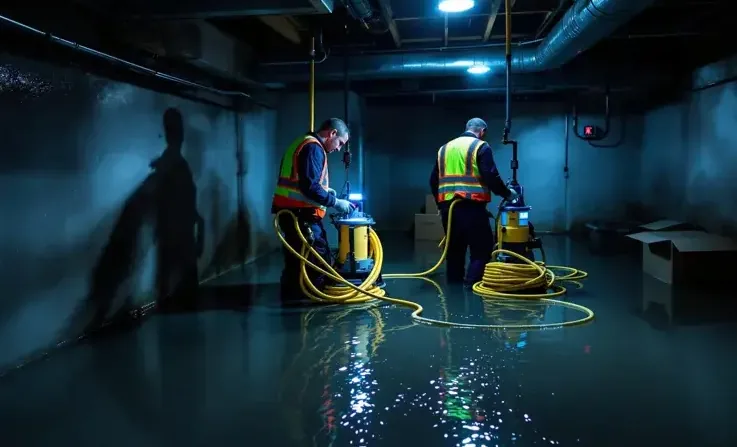
Nearly every home built here since the 1990s has drain tile around the footings that empties into a sump pit. In a wet spring the pump can cycle every few minutes for weeks. When it fails, the water has nowhere to go but up and out across the basement floor.
Why sump pumps fail here
Most failures are predictable. A pump near the end of its life burns out under a heavy thaw. A thunderstorm takes the power out at the moment the pit fills fastest. A discharge pipe freezes solid in February, so the pump runs and nothing leaves the house. A float switch sticks on the pit wall.
- Worn pumps, often past 7 to 10 years of hard cycling
- Power outages during spring and summer storms
- Frozen or buried discharge pipes in winter
- Stuck float switches and clogged inlet screens
Pit water is not clean water
Groundwater that has passed through soil and sat in the pit is usually treated as Category 2 under the IICRC S500 standard. That changes the cleanup: pad and soaked drywall come out rather than being dried, and the floor gets cleaned before drying starts. If the overflow mixed with a floor drain backup, it is Category 3.
Drying the space and checking the pump
The drying team runs LGR dehumidifiers and air movers until the slab, walls and framing match a dry reference. A plumber replaces or repairs the pump; many homeowners add a battery or water-powered backup at the same time. The Ready.gov power outage page covers planning for the outages that stop a pump, and EPA WaterSense covers checking a home's water fixtures.