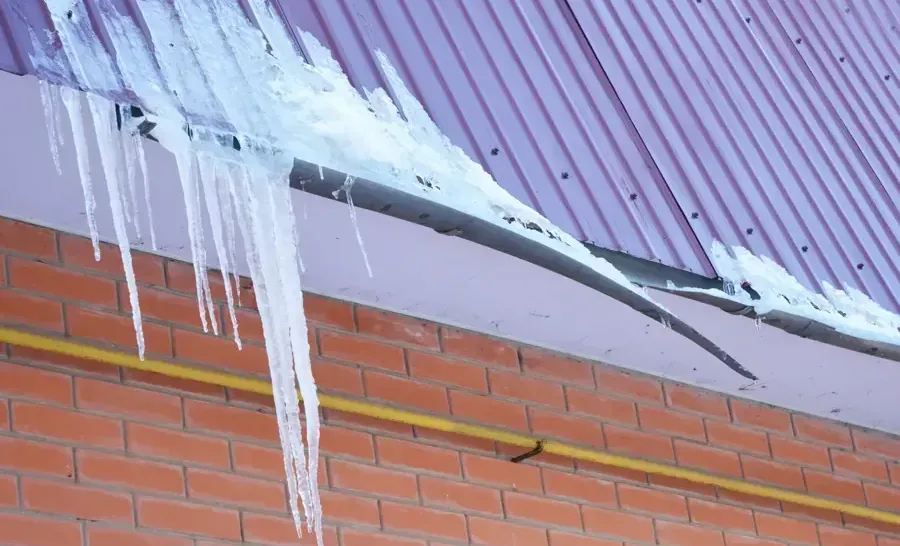
Heat escaping into the attic melts snow on the upper roof. The water runs down to the cold eave, freezes and builds a ridge of ice. Meltwater pools behind that ridge and works up under the shingles, where it drips onto the top plate of the wall and the attic insulation.
How ice dam water shows up inside
The first signs are a stain along the top of an exterior wall, water dripping from a window head, bubbled paint on a cathedral ceiling or icicles growing inside a soffit. By then the insulation above has often been soaking for days.
- Stains where the ceiling meets an exterior wall
- Water at the top of window and patio door frames
- Wet, compressed insulation over the eaves
- Bubbling paint on vaulted and cathedral ceilings
Roof leaks the rest of the year
Summer storms with hail and wind lift shingles and crack flashing around chimneys, vents and skylights. The pattern inside is the same: wet insulation, a stained ceiling and water inside the top of the wall. The mitigation team handles the inside; a roofer handles the roof.
Drying from the attic down
Wet blown-in insulation loses its value and holds water against the drywall, so the crew vacuums out the soaked section. Ceilings that sagged come down; others dry with access holes and directed air. Exterior walls get thermal imaging along the top plate. The National Weather Service winter safety page and the University of Minnesota Extension both cover snow load and ice dam basics for Minnesota homes.