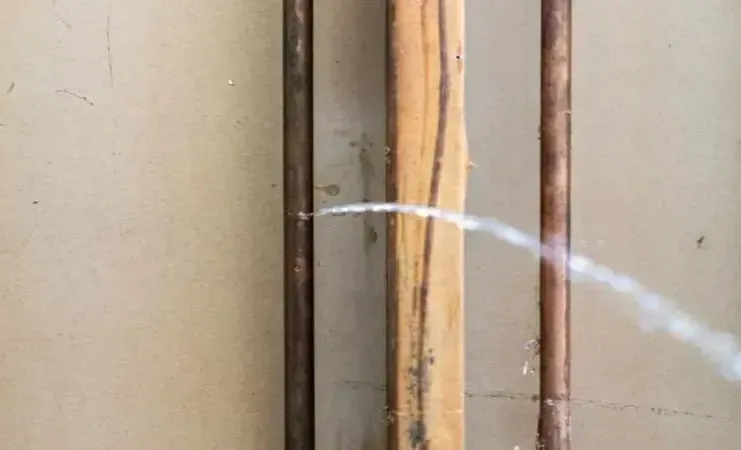
A supply pipe under pressure can release several gallons a minute. Most homes here were plumbed with copper or PEX, and both fail in their own ways: copper develops pinholes, PEX fittings and crimp rings can let go, and shutoff valves and toilet supplies fail at the joint.
Common pipe failures
Pinhole leaks in copper often show up first as a stain or a damp spot, because they spray inside the wall for days before anyone notices. Fitting failures tend to be sudden and loud. Water pressure that runs high strains every joint in the house.
- Pinhole leaks in older copper supply pipe
- Failed PEX fittings and crimp rings
- Shutoff valves and toilet supplies that crack
- Pipes nicked by a nail or screw during a remodel
Following the water inside the walls
Water from a pipe on the main floor runs down through the floor and into the lower-level ceiling below. The tech who does the walkthrough maps moisture on both levels with meters and thermal imaging, because the wet area is usually bigger than the puddle. That map sets which drywall, insulation and flooring come out.
Drying clean-water losses
Category 1 water caught early often lets more materials stay. The drying team extracts the water, drills or opens wall bottoms where needed and runs LGR dehumidifiers and air movers until readings reach the drying goal. The EPA WaterSense Fix a Leak page explains how to check a home for slow leaks, and the Minnesota Department of Labor and Industry oversees the state plumbing code.