Category 3 from the start

Sewage Backup Cleanup in Shakopee, MN

Water that comes up a floor drain or basement toilet has been in the sewer. The cleanup crew contains the area, removes contaminated porous materials, treats every surface and dries what is left.

(888) 432-4933Drain backing up? Get sewage cleanup moving
Category 3 protocols Containment and HEPA EPA-registered antimicrobial
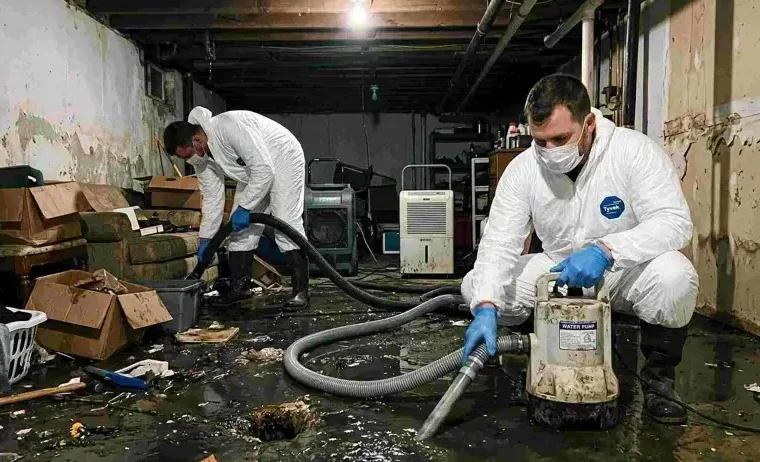
Workers in protective suits pumping a sewage backup out of a cluttered basement
Water category3 (black water)
ProtectionPPE and containment
Typical drying3 to 6 days
Drying standardIICRC S500
Right now

First steps for sewage backup cleanup

  1. Stop all water use

    No flushing, showers, dishwasher or laundry until the drain is clear.

  2. Keep everyone out

    Children and pets stay away from the wet area.

  3. Do not clean it yourself

    Mopping or vacuuming spreads sewage and its bacteria.

  4. Photograph from a distance

    Record the backup from the stairs for the claim.

Trade facts
Water category3, black water
PPE minimumGloves, boots, eye protection, respirator
Removal rulePorous materials touched are removed
TreatmentEPA-registered antimicrobial, full dwell time
The standard

How sewage backup cleanup is held to the drying standard

Rapid local response

Active water is treated as urgent at any hour, because it keeps wicking into drywall, pad and framing after dark.

IICRC S500 drying standard

Structural drying, not just surface drying, with equipment sized to the class of the loss.

Claim-ready documentation

A moisture map, daily psychrometric readings and timestamped photos taken before any demolition.

Cold-climate know-how

Basements, frozen pipes, ice dams and spring thaw water are everyday work in the Minnesota River valley.

Typical cost ranges

What does sewage backup cleanup cost in Shakopee, MN?

In Shakopee, MN, sewage backup cleanup typically runs $3,000 to $15,000 depending on the square footage, how much finished space the sewage reached and how much material has to be removed. Clearing the sewer pipe is a separate plumbing cost.

Small drain backup

$3,000 to $5,000
  • Containment
  • Removal near the drain
  • Antimicrobial and drying

Finished rooms affected

$5,000 to $10,000
  • Carpet, pad, drywall out
  • HEPA air scrubbing
  • Framing treated and dried

Whole lower level

$10,000 to $15,000+
  • Full Category 3 removal
  • Extended containment
  • Clearance before rebuild

Ranges are typical, not a quote. The water category, the square footage that got wet, the material class and how fast drying started move the number most. For a planning range, run the water damage cost calculator.

The process

The sewage backup cleanup process, in order

The order matters: moisture mapping comes before equipment, and equipment stays until the readings say dry, not until it looks dry.

  1. 01

    Contain

    Plastic barriers and a HEPA air scrubber isolate the area.

  2. 02

    Remove

    Contaminated carpet, pad, drywall and insulation come out.

  3. 03

    Clean and treat

    Surfaces cleaned, then an EPA-registered antimicrobial.

  4. 04

    Dry and verify

    Daily readings until the framing reaches the goal.

A sewage backup is Category 3 water the moment it happens. It carries bacteria and viruses from the sewer, so the cleanup follows different rules from a clean-water leak: contain, remove, clean, treat, then dry.

Where backups start in local homes

In most houses the lowest opening to the sewer is a basement floor drain, a basement toilet or a shower. A blockage in the private sewer lateral, roots in older clay pipe near downtown, or a city main overloaded in a cloudburst can push sewage back up through that opening. Homes with a basement bath often have an ejector pit that can fail as well.

  • Floor drain backups during heavy rain
  • Blocked laterals from roots, grease or wipes
  • Failed sewage ejector pumps in basement baths
  • Toilet and tub overflows from a blocked stack

What the Category 3 cleanup includes

The cleanup crew works in PPE: gloves, boots, eye protection and respirators. The area is closed off with plastic and a HEPA air scrubber runs under negative pressure. Porous materials above the water mark, such as carpet, pad, the lower drywall and insulation, are removed, not dried. Hard surfaces are cleaned and treated with an EPA-registered antimicrobial left on for its full dwell time, and only then does drying start.

Drying and clearance

LGR dehumidifiers and air movers dry the framing and slab to the drying goal, with daily readings logged for the claim. The EPA's sanitary sewer overflow page explains why backups happen in wet weather, and OSHA's flood cleanup guidance lists the protective gear used around contaminated water.

Service area

Sewage backup cleanup across Shakopee and the river valley

ZIP 55379 and the river valley around it

The restoration crew covers ZIP 55379 end to end: downtown and the First Avenue riverfront, the 10th Avenue and Vierling Drive neighborhoods, Stonebrooke and Quarry Lake to the south, and Southbridge, Dean Lakes and Eagle Creek Boulevard to the east.

The same crews reach Prior Lake, Savage, Chanhassen, Chaska, Eden Prairie, Jordan, Victoria and Credit River.

Every neighborhood and nearby town

Questions

Sewage Backup Cleanup questions in Shakopee, MN

Is a floor drain backup really sewage?

Yes. Water that comes up a floor drain has been in the sewer system, so the IICRC S500 standard treats it as Category 3 from the start.

Can carpet be cleaned after a sewage backup?

No. Carpet and pad touched by sewage are removed, not cleaned or dried, because the contamination soaks into both layers.

Is it safe to stay in the house?

Usually, if the affected area is closed off and no one goes into it. People with weak immune systems, young children and older adults should stay away from the work area.

Who clears the blockage?

A plumber clears the sewer pipe or ejector pump. The cleanup crew handles the contaminated materials and the drying.

Does insurance cover sewage backup?

Many policies cover it only with a sewer or drain backup endorsement. Coverage depends on your policy, so it is worth checking with your own insurer.

How long does sewage cleanup take?

Removal and treatment usually take a day or two, then drying takes three to five more days before rebuild can start.

24/7 water removal

Sewage on the basement floor? Call for cleanup now.

Category 3 water spreads bacteria into everything porous it touches. Containment and removal come first.

(888) 432-4933Get a sewage cleanup crew moving
Call (888) 432-4933 24/7