Standing water, pulled first

Water Extraction and Removal in Shakopee, MN

Every hour standing water sits, more of it wicks into pad, drywall and framing. The extraction crew pulls it out with truck-mounted units and pumps, so drying can start on a floor that is no longer wet.

(888) 432-4933Water on the floor? Get the extraction rolling
Truck-mounted extraction Submersible pumps for deep water Moisture mapping first
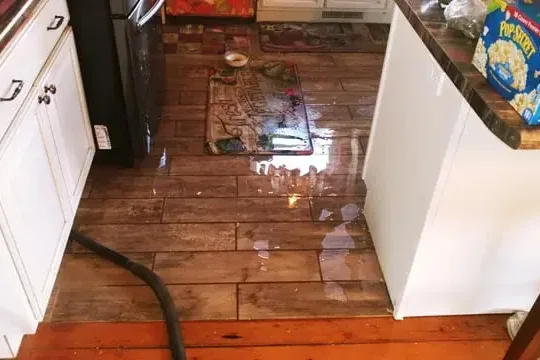
An extraction hose pulling standing water off a flooded kitchen floor
Water categoryAny, 1 to 3
Main toolsTruck mount, pumps, wands
Typical timingHours, then drying
Drying standardIICRC S500
Right now

First steps for water extraction and removal

  1. Stop the source

    Close the main shutoff or the valve feeding the leak, if it is safe to reach.

  2. Cut the power

    Switch off circuits for wet rooms only if the panel is dry.

  3. Lift what you can

    Move rugs, boxes and electronics off the wet floor.

  4. Photograph first

    Take photos of the water before anything is pulled or thrown out.

Trade facts
Water category1, 2 or 3, set by the source
EquipmentTruck mount, pumps, weighted wands
Next stepAir movers and LGR dehumidifiers
RecordsPhotos and moisture map before extraction
The standard

How water extraction and removal is held to the drying standard

Rapid local response

Active water is treated as urgent at any hour, because it keeps wicking into drywall, pad and framing after dark.

IICRC S500 drying standard

Structural drying, not just surface drying, with equipment sized to the class of the loss.

Claim-ready documentation

A moisture map, daily psychrometric readings and timestamped photos taken before any demolition.

Cold-climate know-how

Basements, frozen pipes, ice dams and spring thaw water are everyday work in the Minnesota River valley.

Typical cost ranges

What does water extraction and removal cost in Shakopee, MN?

In Shakopee, MN, emergency water extraction typically runs $500 to $3,500 depending on the square footage, the depth of the water, the water category and whether carpet and pad are saved or removed. Drying is scoped separately.

One room, clean water

$500 to $1,200
  • Wand extraction
  • Carpet lifted and floated
  • Pad removed if soaked

Lower level or several rooms

$1,200 to $2,500
  • Truck-mounted extraction
  • Pumps for standing water
  • Moisture map

Deep or contaminated water

$2,500 to $3,500+
  • Submersible pumps
  • Category 3 handling
  • Carpet and pad disposal

Ranges are typical, not a quote. The water category, the square footage that got wet, the material class and how fast drying started move the number most. For a planning range, run the water damage cost calculator.

The process

The water extraction and removal process, in order

The order matters: moisture mapping comes before equipment, and equipment stays until the readings say dry, not until it looks dry.

  1. 01

    Map the spread

    Meters and thermal imaging show where the water went.

  2. 02

    Pump and extract

    Pumps take deep water; wands and stand-on tools take the rest.

  3. 03

    Remove what cannot dry

    Soaked pad and contaminated materials come out.

  4. 04

    Hand off to drying

    Air movers and dehumidifiers go in on a near-dry floor.

Extraction is the cheapest part of drying. A truck-mounted unit removes far more water in an hour than any dehumidifier can pull from the air in a day, so the drying plan starts with how much water can be lifted out of the carpet, pad and floor first. In split-levels and finished basements, that usually means working from the lowest room up.

Truck-mounted, portable or pumped

The extraction crew picks the tool by depth and access. Inches of water across a lower level call for submersible pumps first, then wands. Carpet over pad gets weighted extraction tools that squeeze water out of both layers. Upper floors and townhomes without a close driveway get portable units.

  • Submersible pumps for standing water deeper than an inch or two
  • Truck-mounted extraction for whole floors of carpet and pad
  • Weighted stand-on tools that pull water from under the carpet
  • Squeegees and wet vacuums on tile, LVP and bare concrete

What happens to the carpet and pad

Clean water caught early often lets the carpet stay: the crew extracts it, lifts it, pulls the wet pad and floats the carpet on air movers. Pad is cheap and holds water, so it usually goes. Anything touched by sewage or river water is removed, not dried, under the IICRC S500 rules for Category 3 water.

The EPA's flood cleanup guidance makes the same point: porous materials that cannot be cleaned and dried quickly should be discarded.

Why extraction comes before the dehumidifiers

Dehumidifiers and air movers are sized to the water left after extraction. Skipping the extraction step means more equipment for more days, higher humidity in the rest of the house and a longer stretch inside the 24 to 48 hour window when mold can start. A thorough pass also shows the tech who does the walkthrough where water has moved under baseboards and into wall bottoms.

Before anyone walks through deep water, the power to that area has to be off. Ready.gov's flood safety page covers the electrical risks.

Service area

Water extraction and removal across Shakopee and the river valley

ZIP 55379 and the river valley around it

The restoration crew covers ZIP 55379 end to end: downtown and the First Avenue riverfront, the 10th Avenue and Vierling Drive neighborhoods, Stonebrooke and Quarry Lake to the south, and Southbridge, Dean Lakes and Eagle Creek Boulevard to the east.

The same crews reach Prior Lake, Savage, Chanhassen, Chaska, Eden Prairie, Jordan, Victoria and Credit River.

Every neighborhood and nearby town

Questions

Water Extraction and Removal questions in Shakopee, MN

How much water can a truck-mounted unit remove?

Far more than portable units, and much more than any dehumidifier pulls from the air. That is why extraction runs before the drying equipment is set.

Can wet carpet be saved?

Often, when the water was clean and caught early. The pad usually goes because it holds water and costs little to replace. Carpet touched by sewage or floodwater is removed.

Should I use a shop vacuum before help arrives?

On clean water and a small area, it can help. On sewage, floor drain backup or river water, stay out of it; that water is Category 3.

How long does extraction take?

Most rooms take an hour or two. A fully flooded lower level with pumping can take most of a day before drying equipment goes in.

Does extraction mean the house is dry?

No. Extraction removes the liquid water. Structural drying then pulls the moisture out of framing, subfloor and concrete, which takes days.

Is extraction covered by insurance?

Extraction for a sudden loss is usually part of the mitigation claim. Coverage depends on your policy, so it is worth checking with your own insurer.

24/7 water removal

Standing water in the house? Get it pulled out now.

Every hour water sits, it wicks further into pad, drywall and framing. Extraction stops that spread.

(888) 432-4933Book emergency extraction
Call (888) 432-4933 24/7