Dehumidification and monitored drying

Structural Drying in Chaska, MN

Once the water is out, the real work is drying. The restoration crew sets air movers and dehumidifiers by room volume and material, reads moisture at every visit and stops only when each surface reaches its dry goal.

(888) 432-4933Get a drying plan set up
LGR dehumidifiers Air movers sized by room Daily readings
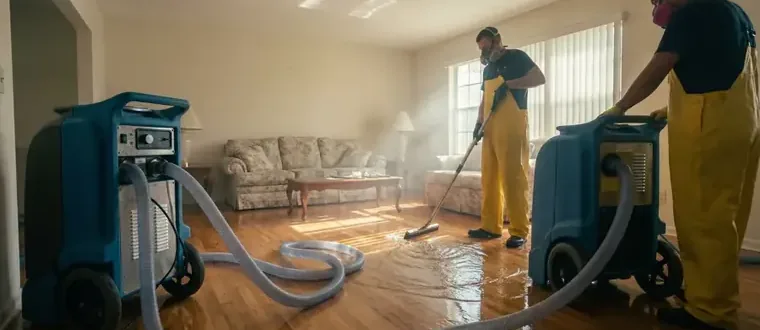
Chaska structural drying: air movers and dehumidifiers drying a room after a loss
StandardIICRC S500
GearLGR dehumidifiers, air movers
ChecksMoisture and humidity each visit
Ends whenDry goals are met
Right now

First steps for structural drying and dehumidification

  1. Leave the equipment on

    Running units cost less than a second round of damage.

  2. Keep doors and vents shut

    Closed rooms dry faster than rooms open to the whole house.

  3. Move belongings out

    Furniture on a wet floor slows drying underneath it.

  4. Expect some noise

    Air movers and dehumidifiers run day and night until readings clear.

Trade facts
StandardIICRC S500 sets the targets
EquipmentLGR units and air movers by room
RecordsDaily logs of every reading
FinishDry goal met, then equipment removed
The standard

How structural drying and dehumidification is held to the drying standard

Rapid local response

Active water is treated as urgent at any hour, because it keeps wicking into drywall, pad and framing after dark.

IICRC S500 drying standard

Structural drying, not just surface drying, with equipment sized to the class of the loss.

Claim-ready documentation

A moisture map, daily psychrometric readings and timestamped photos taken before any demolition.

Cold-climate know-how

Basements, frozen pipes, ice dams and spring thaw water are everyday work in the Minnesota River valley.

Typical cost ranges

What does structural drying and dehumidification cost in Chaska, MN?

Drying cost here depends on how many rooms are wet, how dense the materials are and how long they stayed wet. The three cards below show typical ranges and the equipment each one involves.

Class 1 or 2, one area

$1,000 to $2,500
  • A few air movers
  • One LGR dehumidifier
  • Daily readings

Several rooms or a level

$2,500 to $5,000
  • Several LGR units
  • Walls and floors dried
  • Psychrometric logs

Class 4, dense materials

$5,000 to $8,000+
  • Desiccant drying
  • Hardwood mats or heat
  • Extended monitoring

Ranges are typical, not a quote. The water category, the square footage that got wet, the material class and how fast drying started move the number most. For a planning range, run the water damage cost calculator.

The process

The structural drying and dehumidification process, in order

The order matters: moisture mapping comes before equipment, and equipment stays until the readings say dry, not until it looks dry.

  1. 01

    Map and classify

    Meters and a camera set the class and the equipment count.

  2. 02

    Place equipment

    Air movers and dehumidifiers go where the water is.

  3. 03

    Monitor daily

    Readings are logged and units are moved as areas dry.

  4. 04

    Release the room

    Equipment leaves when every surface hits its goal.

Lower Chaska has homes dating to the 1850s and many brick buildings from the city's brickmaking years, and in the April 1965 flood the water rose above the second floors of many homes. Materials like those hold water differently, so the drying plan has to follow what is actually wet.

Sizing the equipment

Air movers and dehumidifiers are chosen from room volume, the type of material that is wet and how much surface is affected. Classes run from 1 to 4, from a small area of low-absorbing material to dense materials that release water slowly.

  • Class 1 and 2: a few air movers and one dehumidifier
  • Class 3: ceilings, walls and insulation soaked from above
  • Class 4: dense materials such as hardwood, plaster or masonry

Reading the numbers

Moisture content is checked in framing, subfloor and concrete, and temperature and humidity are logged in the air. Falling readings mean the drying is working, while a stall means the equipment has to change. A stalled reading often means a wet material has been missed, such as a sill plate or a cavity behind a cabinet, and the equipment is moved to reach it.

Cold lower levels and dense walls

Cold slows evaporation, so lower levels often need heat. Brick and other dense masonry can take longer than drywall, and the plan leans on repeated readings rather than a fixed number of days. See basement flooding cleanup for the lower level version.

Service area

Structural drying and dehumidification across Chaska and nearby towns

Service area map

Drying is set up across the whole city, from brick buildings downtown and older homes near the river to Jonathan, Clover Ridge, Riverwoods and the lake neighborhoods, at any hour of the day or night.

The same service nearby: structural drying and dehumidification in Shakopee, Chanhassen, Victoria.

Water damage restoration in Chaska · every town covered

Questions

Structural Drying and Dehumidification questions in Chaska, MN

How long does drying take?

It depends on the materials, the water category and the weather. Readings decide when it ends, not a calendar, and the logs show the progress.

Why do the machines run so long?

Evaporation is slow in cold or dense materials, and stopping early leaves moisture in framing that can support mold later, so patience pays.

Can drying happen without removing walls?

Often yes. Small holes or removed baseboards let warm air reach the cavity, and only soaked sections are cut out.

What is an LGR dehumidifier?

It is a low grain refrigerant unit that pulls moisture out of the air even when the room is cool, which suits lower levels and unfinished spaces.

Are readings shared with an adjuster?

Yes. The logs and photos form a record that supports the scope. See water extraction for the stage before drying.

24/7 water removal

Wet framing or floors after a leak?

Describe the rooms and materials that got wet, and the crew will outline the equipment and monitoring that fit.

(888) 432-4933Plan the drying
Call (888) 432-4933 24/7