Chaska sits beside the Minnesota River valley, with creek ravines and clayhole lakes close by, so standing water can arrive from outside the house as easily as from a failed pipe. The extraction crew starts by working out which one it is, because the source decides what can be saved.
Getting the bulk water out first
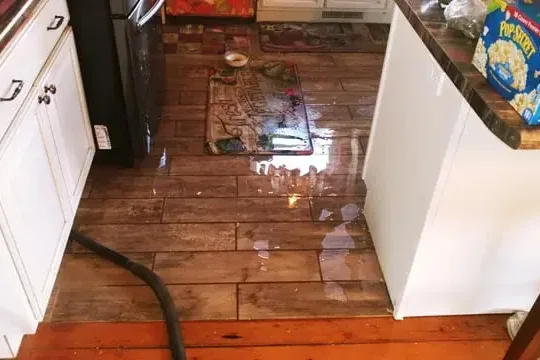
Every gallon left in carpet, pad or subfloor has to be evaporated later, which stretches drying and feeds odors. Truck-mounted units clear wide areas, hand wands reach corners and seams, and submersible pumps take down depth in lower levels. The aim is a floor with no film of water left on it.
- Carpet is floated and lifted so the pad underneath can be pulled
- Soaked pad is removed, since it holds water like a sponge
- Hard floors are worked along seams, edges and transitions
When the water came from outside
Groundwater, creek runoff and snowmelt carry silt and bacteria, so the crew treats them as contaminated until readings and the source say otherwise. Foundation walls, window wells and the sump pit are checked before anyone blames a supply pipe. Heavier events move into flood water cleanup, where mud-out and disposal join the plan. Silt left behind is removed with the water so it cannot dry into a crust on the floor.
What happens after the water is gone
Extraction is only the first half of the job. A moisture map shows what is still wet inside walls, framing and subfloors, and structural drying equipment pulls the rest out. Readings repeat until every material reaches its dry goal, and only then does the equipment leave. Rooms are closed off during this stage so the air in them can be dried without drawing damp air in from the rest of the house.