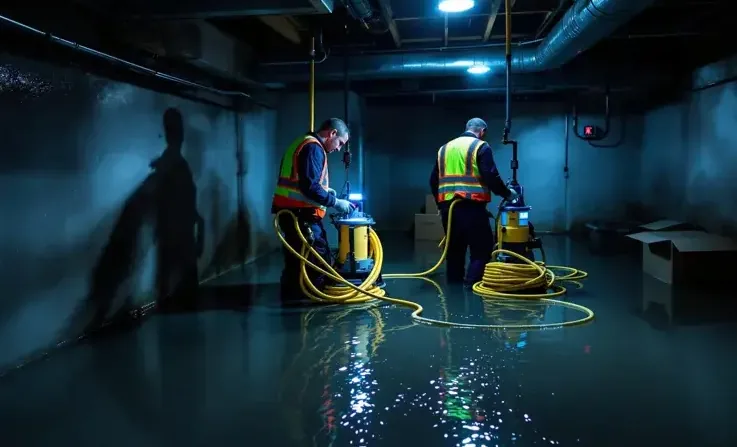
The city says groundwater from a sump pump cannot be pumped into the sanitary sewer, which makes the discharge pipe a real part of the system. When a pump quits, or its discharge is blocked or misrouted, the water has nowhere to go but back into the house.
How the water moves after a failure
Water rises in the pit first, then spills onto the slab and spreads toward floor drains and low corners. From there it creeps into wall bottoms and under any flooring laid over the concrete. Groundwater carries soil and bacteria, so wet porous materials are treated as contaminated.
- Carpet and pad at the edge of the spill are lifted and checked
- Drywall bottoms are probed with a moisture meter
- Stored boxes and furniture feet are moved onto blocks
Fixing the cause matters too
Drying a lower level while the pump is still failing only invites the next round. A plumber can restore the pump, and the discharge pipe should be checked to confirm it is hooked up correctly and carries water outside. The restoration crew works around that repair and keeps the pit pumped down while the room dries.
Drying the slab and the walls
Once the standing water is out, structural drying begins, and dehumidifiers and air movers pull moisture from the slab and the lower wall cavities. Readings are logged at each visit, and equipment stays until the concrete and framing meet their dry targets.