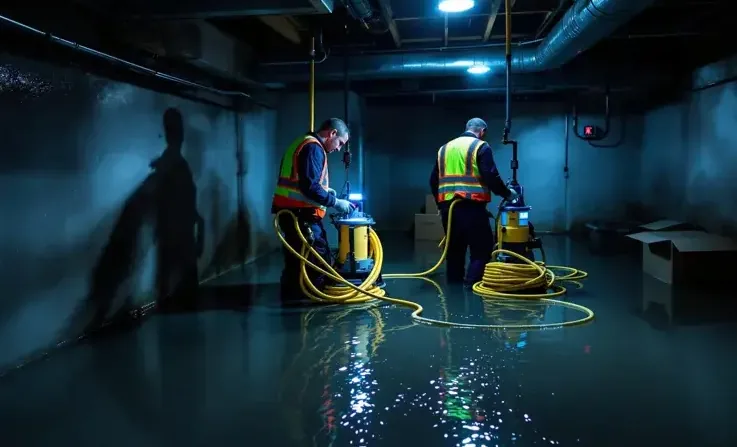
Water from a sump pit is groundwater, so it carries soil and bacteria into whatever it touches. That puts these losses a step above a clean supply leak. A fast thaw can bring water through the walls instead, which falls under snowmelt seepage.
Because the water often arrives with a storm, the pit room is rarely the only room involved. Finished space next door, a laundry area or a storage corner can take on water in the same event.
Why a pump fails when it is needed
Pumps lose power in storms, jam on debris, burn out after years of cycling or hang on a stuck float. In Chanhassen the city counts sump pumps among the things that affect yard drainage, so the discharge pipe also matters: water pumped out near the foundation can find its way back to the pit.
What the crew removes
- Standing water in the pit room and beyond
- Carpet and pad that sat in groundwater
- Drywall and baseboard along the lower wall
- Stored boxes and soft goods that wicked water
Each item removed is listed and photographed first, so the owner has a record of what the water reached. Hard surfaces such as concrete and sealed tile stay in place and are cleaned.
Drying and a plan for the next storm
Framing and slab are treated, then dried with heat and low-grain dehumidifiers. Afterward the owner can have the pump, battery backup and discharge path checked, and a larger basement flood calls for the same drying plan.