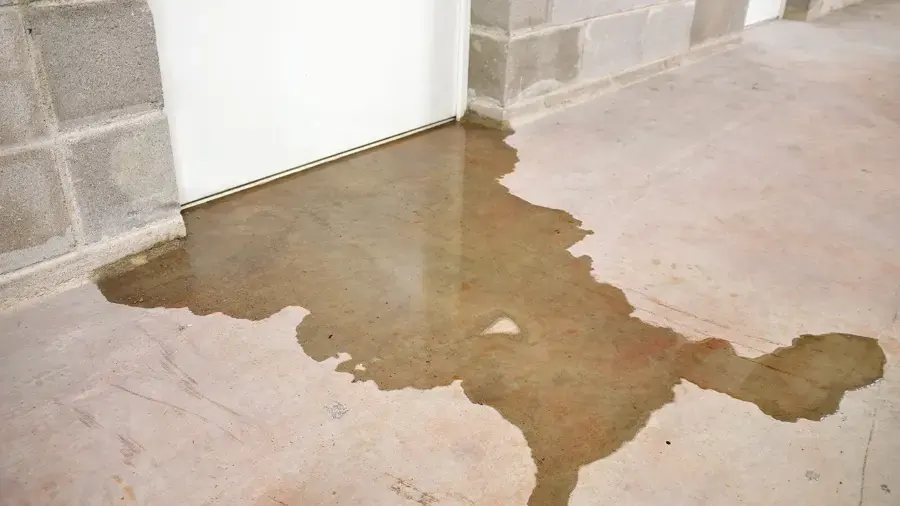
Seepage rarely announces itself. A damp carpet edge, a musty smell by one wall or a white crust on the block is often the first sign, and by then the water has usually been working for days.
Why the thaw is the pressure point
Across Minnesota the ground freezes for weeks every winter, and when it lets go the melt has to travel somewhere. Chanhassen has 12 lakes and 356 wetlands, and the city lists shallow groundwater among the reasons yards drain poorly, so a wall that stayed dry all summer can start to weep.
- A damp carpet edge along one wall
- White mineral crust on block or concrete
- A musty smell at the floor and wall joint
- Paint peeling low on a finished wall
What the crew checks and removes
A meter and a thermal camera show how far the moisture runs behind the finish. Baseboard comes off, the carpet edge is lifted, and the bottom of the drywall is opened only where readings stay high. Surfaces that test dry stay put. A pit that overflowed instead is handled under sump pump failure.
Drying, and what stops the next thaw
Seepage is slow, so the drying has to be steady and thorough, much like a flooded basement at smaller scale. Fixing the entry point is a job for a foundation or grading contractor, and the city asks owners to reach an encroachment agreement before changing grade inside a drainage and utility easement.