Lower level flood recovery

Basement Flooding Cleanup in Chanhassen, MN

A flooded lower level soaks carpet, drywall bottoms and insulation all at once. The cleanup crew pumps it out, removes what the water ruined and dries the slab and framing until the readings settle.

(888) 432-4933Call for basement cleanup
Pump-out and extraction Flood cuts above the water mark Daily moisture readings
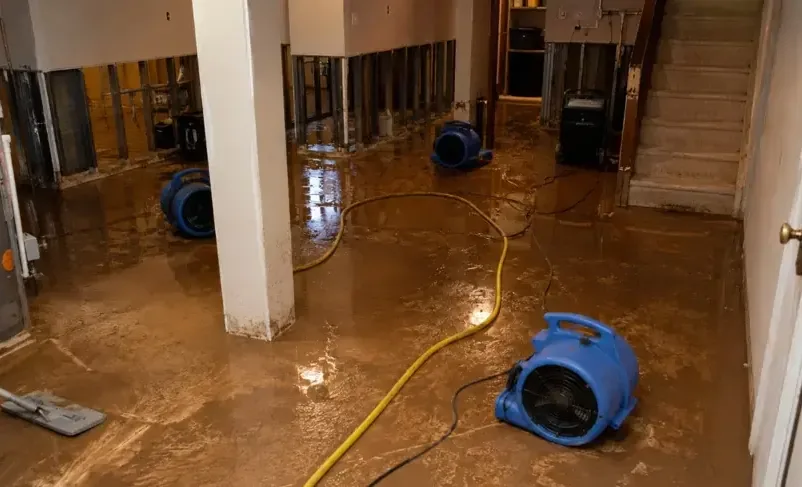
Standing water spread across a finished basement floor in Chanhassen
First movePump-out to the bare slab
Finished wallsCut above the wicking height
InsulationWet batts removed outside walls
Dry-downReadings every day
Right now

First steps for basement flooding cleanup

  1. Stay off the stairs

    Do not enter until power to the basement is off at the panel.

  2. Move contents up

    Carry dry boxes and electronics to a higher floor, and leave soaked items.

  3. Find the source

    Check the pump, the floor drain and the window wells.

  4. Keep the pad

    Leave wet carpet in place so the crew can see how far the water went.

Trade facts
Water category1, 2 or 3, set on site
Floor targetConcrete at dry reference
Walls openedAbove the wicking height
Gear runningLGR dehumidifiers, air movers
The standard

How basement flooding cleanup is held to the drying standard

Rapid local response

Active water is treated as urgent at any hour, because it keeps wicking into drywall, pad and framing after dark.

IICRC S500 drying standard

Structural drying, not just surface drying, with equipment sized to the class of the loss.

Claim-ready documentation

A moisture map, daily psychrometric readings and timestamped photos taken before any demolition.

Cold-climate know-how

Basements, frozen pipes, ice dams and spring thaw water are everyday work in the Minnesota River valley.

Typical cost ranges

What does basement flooding cleanup cost in Chanhassen, MN?

A basement flood here usually runs from $2,500 for a partly finished space to $12,000 or more for a whole contaminated level. Finish quality, the water category and how long it sat set the number.

Unfinished or partly finished

$2,500 to $4,500
  • Pump-out and extraction
  • Concrete and wall drying
  • Daily readings

Finished lower level

$4,500 to $8,500
  • Carpet, pad and flood cuts
  • Outside-wall insulation out
  • Framing dried

Contaminated or whole level

$8,500 to $12,000+
  • Category 3 removal
  • Containment and antimicrobial
  • Extended drying

Ranges are typical, not a quote. The water category, the square footage that got wet, the material class and how fast drying started move the number most. For a planning range, run the water damage cost calculator.

The process

The basement flooding cleanup process, in order

The order matters: moisture mapping comes before equipment, and equipment stays until the readings say dry, not until it looks dry.

  1. 01

    Pump and extract

    Pumps drop the water level, then extractors clear the slab and carpet.

  2. 02

    Remove the wet

    Pad, carpet, lower drywall and soaked insulation are cut out and carried up.

  3. 03

    Treat the surfaces

    Slab and studs get an antimicrobial pass before drying gear is set.

  4. 04

    Dry and verify

    Meters are read daily until concrete and wood reach target.

A basement holds more water than any other room and dries slower, because concrete, framing and buried insulation release moisture for days. The order of work matters as much as the equipment.

Why lower levels take on water here

The city lists shallow groundwater, low spots and sump pumps among the reasons yards drain poorly, and surface water covers about 26% of Chanhassen. Nearly every lot also carries a drainage and utility easement, so the grade around a house is not always the owner's to change.

Heavy rain and snowmelt tend to arrive in the same few days, and a lower level has little room for error. A window well that fills, a floor drain that backs up or a pump that cannot keep pace can each put an inch of water on the floor quickly.

What comes out of a finished basement

Carpet and pad go first. Drywall is cut a few inches above the highest point the water wicked, and insulation on the outside walls comes out because it stays wet against the concrete. Cuts are straight and level so the wall can be patched cleanly afterward. Anything the water only touched at the surface is dried instead of torn out, which keeps the repair smaller.

  • Carpet, pad and tack strip
  • Lower drywall and baseboard
  • Wet batt insulation on outside walls
  • Cabinet toe kicks and bottom plates, when soaked

Drying the slab and the framing

Once the debris is out, dehumidifiers and air movers run against the studs and the floor while meters track the drop. If the water came from a failed pump, the cause is covered under sump pump failure, and a backup from the drain is a sewage job.

Service area

Basement flooding cleanup across Chanhassen and nearby towns

Service area map

The cleanup crew handles finished and unfinished lower levels across the city, from the older streets near Lotus Lake and Carver Beach to the neighborhoods around Lake Susan, Bluff Creek and the Lake Ann Park area.

The same service nearby: basement flooding cleanup in Shakopee, Chaska, Victoria.

Water damage restoration in Chanhassen · every town covered

Questions

Basement Flooding Cleanup questions in Chanhassen, MN

How fast does a flooded basement need attention?

Pumping and removal should start as early as possible, since drywall and carpet begin to fail quickly and mold can appear within 24 to 48 hours. Speed keeps a repair small.

Can a finished basement be saved?

Often the framing and slab can, once wet drywall, pad and insulation are removed. The crew sets the cut height from moisture readings, not guesswork.

Why is insulation removed?

Batts on outside walls sit against wet concrete and hold water. They stay damp for weeks and keep the wall cavity from drying. That is why it comes out even when the surface looks fine.

Who owns the grade around the house?

Nearly every lot has a drainage and utility easement, and the city asks for an encroachment agreement before the grade or structures there are changed.

Does it matter where the water came from?

Yes. Clean supply water, yard water and sewage need different handling, and the category changes what is removed and how the area is cleaned.

24/7 water removal

Get the lower level dry

Tell the crew how high the water rose and what the floor is made of, and a plan for pump-out and drying comes together from there.

(888) 432-4933Report the flood
Call (888) 432-4933 24/7