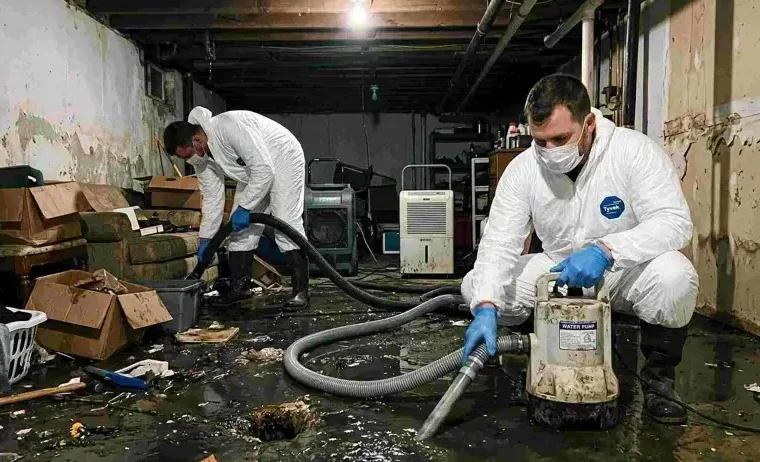
A backup from the sewer is Category 3 water the moment it appears. Because it carries bacteria and viruses, the work follows a set order: seal the area, take out what soaked, disinfect, and only then dry.
Whose pipe, whose cleanup
The city says the property owner is responsible for clearing any blockage in the service pipe between the home and the city sewer main, including roots and debris, and for cleaning and repairing the damage a backup causes. It asks residents to contact the city first, so a utility worker can tell whether the problem sits in the city main or the private service pipe, before a drain cleaning company is called.
- Roots growing into the private service pipe
- Grease and improper disposal down drains
- Flushable wipes and paper towels that do not break down
What the 2011 backup showed
On February 23, 2011, a crack in a city water main flooded a manhole, and sewage backed up into about two dozen basements along Chanhassen Hills Drive and Lake Susan Drive. Most of those homes had finished basements, and the sewage ruined washers, dryers, furnaces, carpets and lower walls. That is why porous materials in a lower level come out after a backup instead of being dried.
The Category 3 cleanup, in order
Crew members wear respirators, eye protection, gloves and boots. Plastic walls close off the work area while a HEPA air scrubber filters the air. Everything porous the sewage reached, such as carpet, pad, wall bottoms and insulation, is cut out and bagged. Exposed surfaces are washed and disinfected with an EPA-registered antimicrobial for its full contact time, then structural drying takes the studs and slab down to the goal. The main sewage backup cleanup page walks through each step in more depth.