High water recovery

Flood Water Cleanup in Chanhassen, MN

Floodwater carries mud and runoff into every room it reaches. The cleanup crew pumps it out, shovels the silt and removes what the water soaked, then cleans and dries the structure.

(888) 432-4933Call the flood crew
Pump-out and mud removal Category 3 handling Structural drying
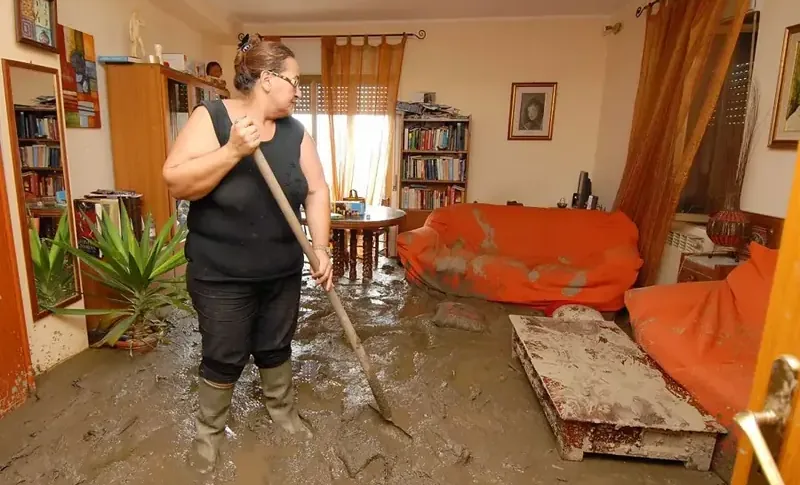
Muddy floodwater across a living room floor in Chanhassen
Water typeCategory 3 floodwater
MudShoveled, hauled, rinsed
RemovalBelow the water mark
FinishCleaned, then dried
Right now

First steps for river and flash flood cleanup

  1. Stay out of the water

    Floodwater can hide debris and live power, so wait for the panel to be shut off.

  2. Protect what is dry

    Move documents, electronics and medicine above the water mark.

  3. Photograph the mark

    Record the water height on walls and furniture before cleanup.

  4. Do not run fans yet

    Fans spread contaminated dust before the mud is removed.

Trade facts
Water category3, contaminated floodwater
Removal heightAbove the highest water mark
CleaningWash, then antimicrobial
DisposalPorous goods bagged and hauled out
The standard

How river and flash flood cleanup is held to the drying standard

Rapid local response

Active water is treated as urgent at any hour, because it keeps wicking into drywall, pad and framing after dark.

IICRC S500 drying standard

Structural drying, not just surface drying, with equipment sized to the class of the loss.

Claim-ready documentation

A moisture map, daily psychrometric readings and timestamped photos taken before any demolition.

Cold-climate know-how

Basements, frozen pipes, ice dams and spring thaw water are everyday work in the Minnesota River valley.

Typical cost ranges

What does river and flash flood cleanup cost in Chanhassen, MN?

Flood cleanup here runs from about $4,000 for a garage or unfinished space to $20,000 or more for deep, multi-level flooding. Depth, mud load and how many finished rooms flooded set the number.

Garage or bare lower level

$4,000 to $7,000
  • Pumps and mud shoveled out
  • Washed and sanitized
  • Dried

Finished lower level flooded

$7,000 to $13,000
  • Wet finishes cut out below the mark
  • Insulation and drywall hauled away
  • Framing and slab dried

Deep or several levels

$13,000 to $20,000+
  • Complete Category 3 removal
  • Heavy silt cleanout
  • Long drying with monitoring

Ranges are typical, not a quote. The water category, the square footage that got wet, the material class and how fast drying started move the number most. For a planning range, run the water damage cost calculator.

The process

The river and flash flood cleanup process, in order

The order matters: moisture mapping comes before equipment, and equipment stays until the readings say dry, not until it looks dry.

  1. 01

    Pump down

    Water is lowered in steps so walls hold.

  2. 02

    Mud out

    Silt is shoveled and rinsed from floors and wall bases.

  3. 03

    Remove and wash

    Wet porous materials go out and framing is washed and treated.

  4. 04

    Dry and clear

    Equipment runs until readings reach target.

Floodwater collects soil, runoff and whatever else it crosses, so it is handled as contaminated from the start. Porous materials it touched rarely come back.

Why high water matters here

The city has 12 lakes and enforces Slow-No-Wake limits at high water on Lotus Lake, Lake Lucy, Lake Minnewashta and Lake Susan, with the City Engineer deciding when they start and end. Four watershed organizations share the area. After torrential rain on June 2, 2014, Lake Minnetonka reached a record-high level in regional flooding across the western Twin Cities.

  • Silt and mud worked into carpet and under cabinets
  • Wet insulation and drywall below the water mark
  • Contaminated furniture, bedding and stored goods

Mud-out and removal

Pumps lower the water first, then crews shovel and rinse the mud from floors and wall bases. Drywall and insulation are cut above the highest water mark, and everything porous that sat in the water is bagged and carried out. Contents are sorted on site into what can be washed and what has to go.

Cleaning and drying

Slab, studs and joists are washed and treated with an antimicrobial before any drying gear is placed. Remaining pooled water goes through water extraction, and a flood that came up through a drain is handled as sewage.

Service area

River and flash flood cleanup across Chanhassen and nearby towns

Service area map

Flood crews work in lower levels and garages across the city, including homes near Lotus Lake, Lake Susan, Lake Minnewashta and Lake Lucy, as well as inland streets hit by heavy runoff. Each job starts with a safety check.

The same service nearby: river and flash flood cleanup in Shakopee, Chaska, Victoria.

Water damage restoration in Chanhassen · every town covered

Questions

River and Flash Flood Cleanup questions in Chanhassen, MN

Why is floodwater treated as contaminated?

It carries soil, runoff and sometimes sewage, so the crew handles it as Category 3 and removes porous materials it touched.

Can wet drywall be dried instead?

Not after contaminated water. Drywall and insulation below the water mark are cut out, because drying does not make them safe again.

What happens to furniture and rugs?

Hard goods can be washed and dried. Upholstery, mattresses and rugs that sat in floodwater are usually discarded.

Does heavy rain always mean a flood loss?

No. A flood loss means water entering the structure, whether from a rising lake, runoff or a drain, and the crew sets the category on site.

Who should be called first?

Call about safety first, such as power and gas. The cleanup crew can begin once the area is safe to enter.

24/7 water removal

Clear the mud before it sets

Say how high the water rose and which rooms it reached, and the crew will plan pump-out, mud removal and drying.

(888) 432-4933Report the flooding
Call (888) 432-4933 24/7