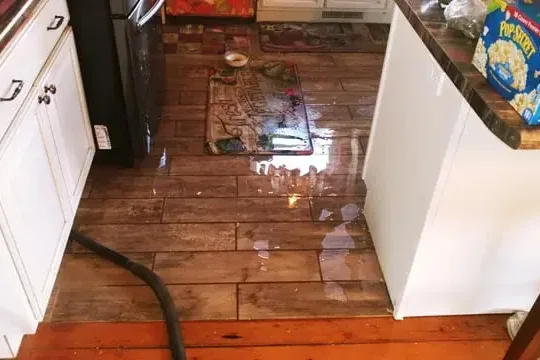
Extraction is the first job on any wet floor. Each hour the water sits, it travels farther into carpet pad, baseboards and the bottoms of the walls, so removal comes before fans, heat or demolition.
Where the standing water starts
Chanhassen has 12 lakes and 356 wetlands, and the city names low spots, gradual grades, shallow groundwater, roofs, driveways and sump pumps among the causes of poor yard drainage. A flooded lower level can begin outdoors just as easily as with a split supply hose, and the crew reads the source before choosing tools.
- Overflowed sinks, tubs and washing machines
- Failed supply hoses and water heaters
- Yard water that finds its way across a foundation wall
How the crew pulls it out
Shallow water comes up with a wand on carpet and a squeegee head on tile or concrete. Deeper pooling goes to submersible pumps first, and a truck-mounted extractor then takes whatever the pumps leave behind in the fibers and seams.
Carpet that sat in clean water is often floated off the pad and dried where it lies. Soaked pad is removed and bagged, because it holds water long after the surface feels dry.
Rooms with wood or tile get special care. Water slips under click flooring and behind cabinet toe kicks, so the crew pulls a few pieces to check, and thermal imaging marks wet areas that a surface reading would miss. Nothing is removed that a meter says is dry.
What happens once the water is out
The crew walks the area with a moisture meter and builds a map of what is still wet. That map decides how much equipment the room needs, and the work moves straight into structural drying. A flooded basement usually needs the same sequence at a larger scale.