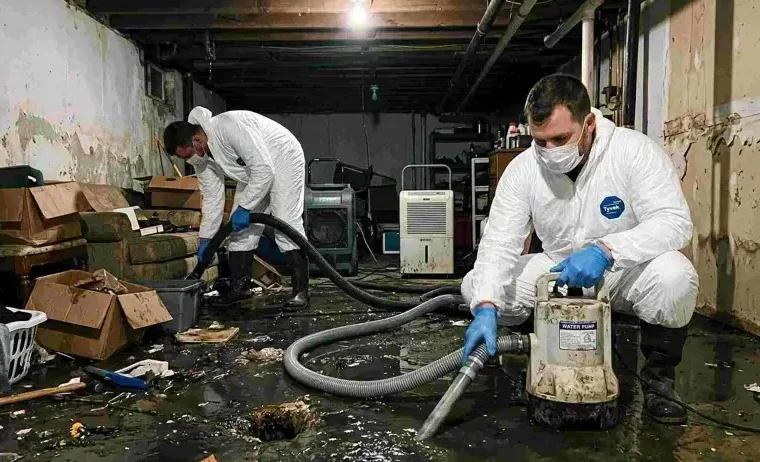
The city says sanitary sewer problems are not common, and it jets its sewer mains once every three years to keep them moving. When a backup does happen, the water carries bacteria and has to be treated as hazardous from the start.
Where the backup comes from
The city's collection system has 2,800 manholes and seven lift stations, and the flow then moves to a Metropolitan Council Environmental Services lift station and on to the Blue Lake Wastewater Treatment Facility in Shakopee. A blockage anywhere along that path can push waste back into a lower drain, so finding the cause comes before the cleanup.
- Floor drains and basement bathrooms are the usual spill points
- Washed-in debris and wet porous materials are bagged and removed
- Hard surfaces are cleaned, then disinfected
Containment and removal
The work area is sealed with plastic and a HEPA air scrubber runs while carpet, pad, wet drywall and soaked insulation are cut out. Anything porous that touched sewage is discarded, because cleaning cannot make it safe again. Pumps take up the liquid first so the solid material can be bagged without being dragged across clean floors.
Disinfecting and drying
Studs, slabs and any hard surface left behind are cleaned, treated with disinfectant and then dried with dehumidifiers and air movers, as described under structural drying. Surfaces are checked before any rebuilding begins. Air scrubbers stay on until the dust from demolition has cleared.