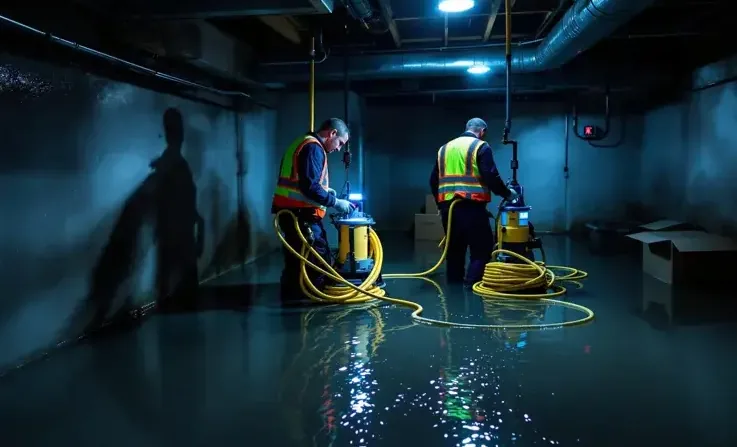
A sump pump works only when power, float and discharge all hold up, and a storm tests every one of them. In Victoria, once the pit overflows, the cleanup matches any lower-level flood, with a few extra cautions.
Why high water makes a stalled pump costly
The city lists 13 main lakes and works with the watershed district on local wetlands, and a 2015 study found Lake Zumbra peaks about 7 days after large rain events. When high water lingers, a pump that quits needs attention fast, because the ground around a foundation stays wet long after the storm ends.
- Water extracted from the pit, the floor and low corners
- Wet carpet, pad and lower drywall removed where soaked
- Slab, sill plates and wall bottoms dried to readings
Water category after a pump failure
Water coming up through a pit or across a slab has touched soil, so it counts as category 2 at minimum. If a floor drain also backed up or the water sat for days, it moves toward category 3, and porous materials are removed rather than saved. The crew tests and explains that call before cutting anything.
Getting the pump working again
Restoration crews dry and clean, while a plumber or pump specialist replaces the pump, checks the float and tests the discharge. Doing that early keeps a second storm from repeating the loss. See basement flooding cleanup for larger losses.