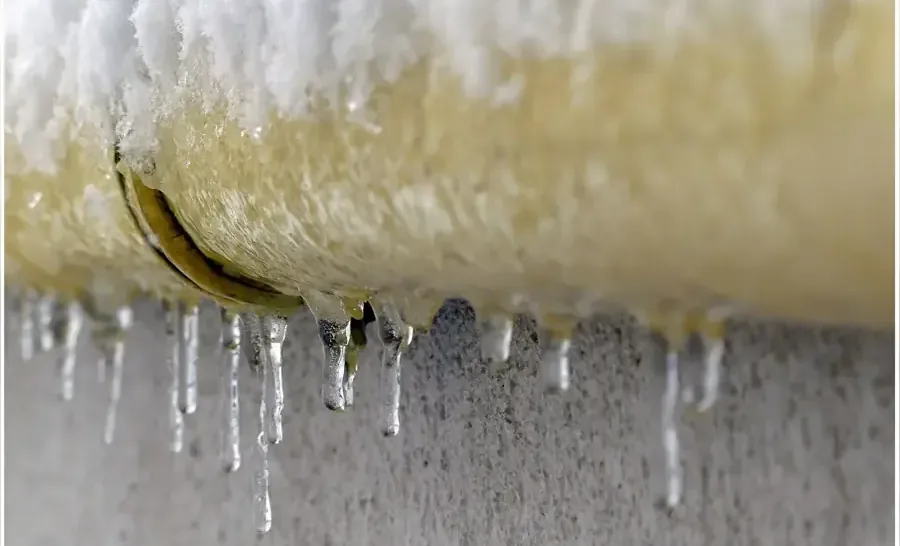
A City of Chaska bulletin describes the city responding to several homes where pipes burst as the weather moved from a deep freeze into a thaw. That pattern is typical of frozen pipes, because ice often holds a crack closed until the thaw lets water through.
Why the damage shows up at the thaw
Ice can plug a split completely. When temperatures rise, the plug melts and the pipe empties through the crack, often inside a wall or above a ceiling where no one is looking. By the time a stain appears, the cavity has been wet for a while.
- Ceilings below the pipe darken or sag
- Baseboards and wall bottoms feel damp
- The water meter keeps moving with every fixture off
Opening the right places
The drying team follows moisture meters and a thermal camera along the wall instead of cutting at random. Wet insulation and drywall are removed so the cavity can dry, and a small access hole is often enough when the leak was short. Each opening is kept as small as the readings allow, so less has to be rebuilt.
Drying both levels
Water from an upstairs wall reaches the floor and ceiling below, so both levels get air movers and dehumidifiers. Readings continue until the studs, subfloor and ceiling joists reach their dry goals. Repair of the pipe itself belongs to a plumber, and the drying plan is described under structural drying.