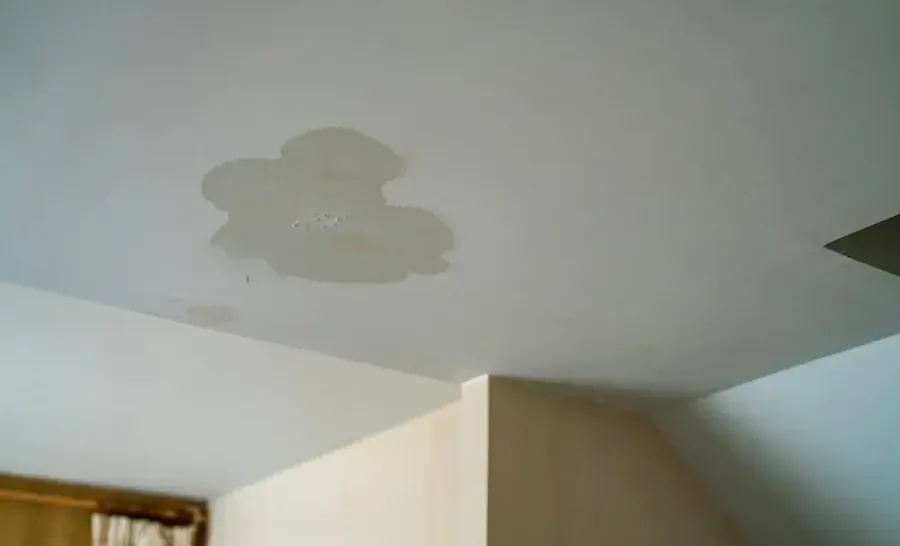
A 2007 city plan estimate counted 2,104 apartment and condominium units in Chaska, with scattered rentals in older buildings as well. In multi-unit buildings a ceiling leak often starts in someone else's home.
Where ceiling water comes from
Supply and drain pipes in the floor above, a failed appliance, a roof leak and a tub overflow all end up in the same place: the ceiling bay. Drywall holds water until it sags, and the insulation above it holds more. Water can also travel along a joist and show up several feet from the real source.
- A stained ceiling means water is already sitting above it
- Bubbling paint and a soft spot point to the wet area
- Fixtures in the unit above are the first thing to check
Apartments, condos and rentals
About one in four housing units in the city is renter-occupied, 25.1 percent in the 2005 to 2007 American Community Survey, so a leak often crosses units and owners. Photographing the damage and telling the property manager or association early keeps the repair and the drying on one schedule.
Opening the ceiling
The crew cuts only what the meter says is wet, usually the sagging section and a margin around it. Wet insulation is removed, joists and subfloor are dried, and the room below is checked for damp walls. Pipe-related sources are covered under burst pipe water damage.