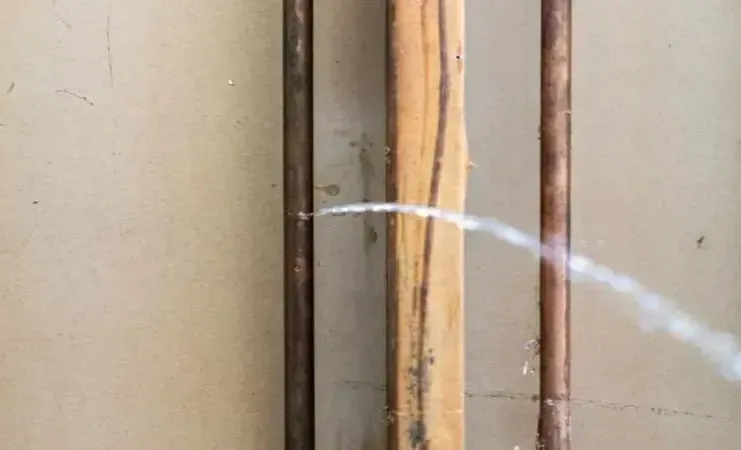
The city notifies customers when its metering system sees water use on four consecutive days, a reminder that a running leak can go unnoticed. A burst pipe is the loud version of the same problem: a lot of water, quickly.
Where a burst pipe sends the water
Supply pressure keeps pushing water until the main valve is closed, so it follows gravity into wall cavities, down through ceilings and into subfloors. Cabinet toe kicks, wall bottoms and the ceiling below are the places most often left wet.
- Ceiling drywall below the break is checked for sag and stain
- Flooring and pad are lifted where water pooled
- Cabinet toe kicks are opened to reach trapped water
The meter and the permit
The city says meters in homes are usually inside and read remotely, and it suggests checking the meter before and after two hours with no water use to confirm a leak. Repairs to a plumbing system need a city plumbing permit, so the pipe repair and the water cleanup run side by side.
Drying through every layer
Clean supply water is Category 1, but it turns worse the longer it sits in insulation and carpet pad. The crew dries ceiling, wall and floor together and logs readings, so none of the layers is signed off early. The water extraction stage comes first.