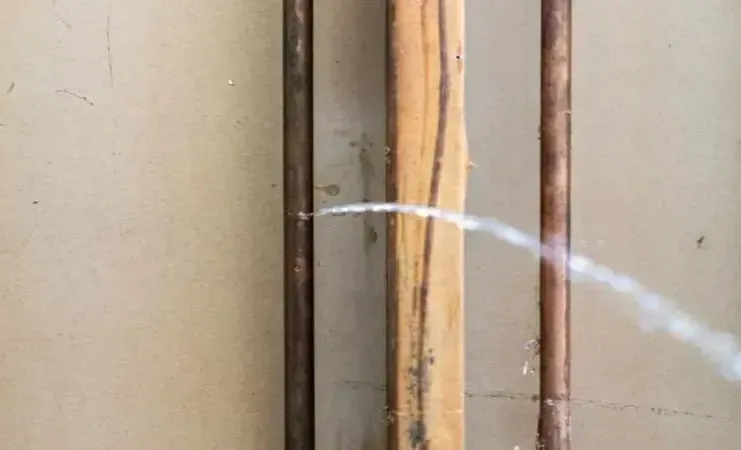
A burst pipe does most of its harm before anyone finds it. Water runs along framing and down through openings, so the wet area is nearly always larger than the stain.
Pipes of every age fail
Victoria added 160 new single-family homes in 2024, while about 585 housing units date from before 1980 and 101 of those from 1939 or earlier. A burst can happen in any of them. The city's August 2024 service pipe inventory counted 3,965 non-lead pipes and 2 galvanized pipes needing replacement, but that inventory is about the city's service pipes, not the plumbing inside a house.
- Water shut off and the source isolated
- Extraction from every wet floor and cavity
- Ceiling below and wall bottoms opened and dried
Following the water
Water from a second-floor pipe drips through light fixtures and ceiling edges, while a basement pipe soaks drywall at the bottom. The crew traces both with meters and a thermal camera before opening anything, so the removal stays no larger than needed.
After the shutoff
Once the valve is closed and a plumber repairs the pipe, extraction and drying decide how the loss ends. Cabinet toe kicks, wall bottoms and subfloor edges are opened because they trap moisture. See frozen pipe water damage for cold-weather splits.