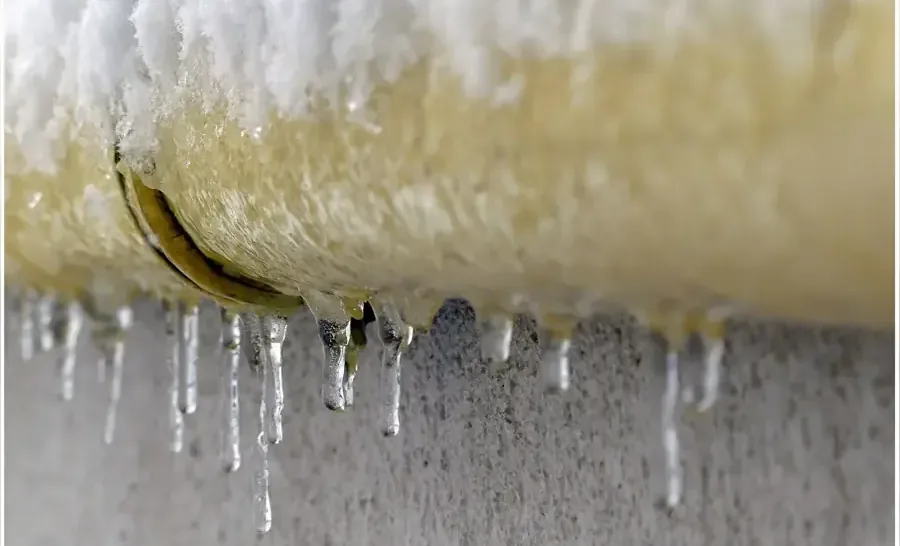
Ice expands inside a pipe, but the split usually stays sealed until the temperature rises. The water arrives on the thaw, often while the house is empty, and it can run for a long time inside a wall.
Why freezes strike here
Across Minnesota the ground freezes for weeks every winter, a regional pattern that puts pipes in exterior walls, garages and crawl spaces under steady stress. In Chanhassen the city maintains the water main and service connection up to but not including the curb box, and the owner maintains the pipe from there to the house.
- Pipes in outside walls or unheated spaces
- Hose bibs and short runs near garage doors
- Supply pipes above a cold ceiling
What the crew does after the thaw
The first task is stopping the flow, which means locating the main shutoff. Then extraction, insulation removal and drilled or cut openings let the cavity dry instead of trapping the water. The floor below is checked too, since a wall leak rarely stays on one level.
Drying and prevention
Dehumidifiers and air movers run through the opened cavities until readings level out. A burst pipe call follows the same sequence, and a ceiling that has already stained is a ceiling leak job as well.
Prevention is simple and cheap. Keep the heat on, open cabinet doors against cold walls and let a faucet drip during a hard freeze. A shutoff valve that turns freely makes a split easy to stop.