Roof edge leaks

Ice Dam Water Damage in Chanhassen, MN

Meltwater trapped behind a ridge of ice at the roof edge works its way under shingles and into the attic, the walls and the ceiling. The drying crew removes the wet insulation and dries each cavity.

(888) 432-4933Call about the roof leak
Wet insulation removed Attic and ceiling dried Exterior wall cavities opened
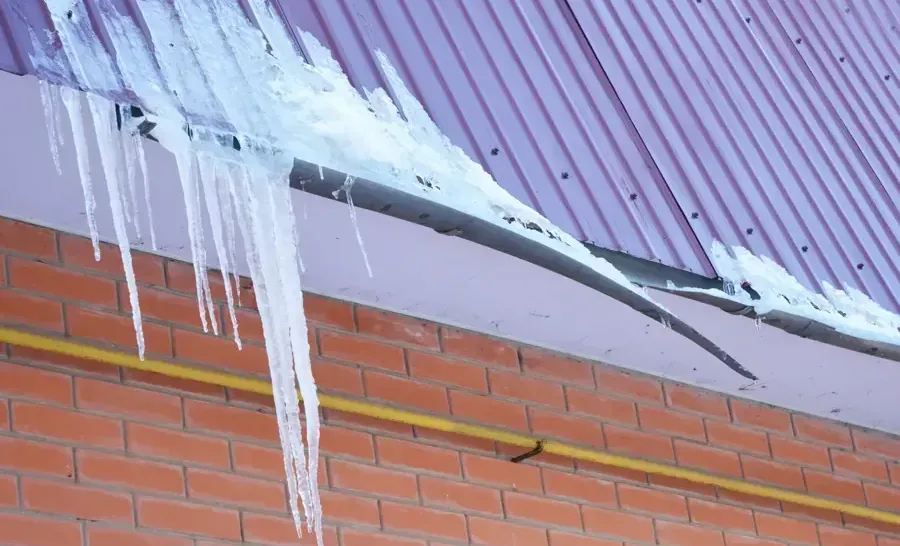
Ridge of ice and long icicles along a roof edge above a brick wall in Chanhassen
CauseRoof snow melts, then refreezes
EntryUnder shingles at the eaves
DamageInsulation, ceiling, wall tops
DriedAttic and wall cavities
Right now

First steps for ice dam and roof leak water damage

  1. Keep clear of the roof

    Do not climb up to chip ice, since it risks falls and shingle damage.

  2. Contain the drip

    Place buckets under active drips, and keep people out from under a bulging ceiling.

  3. Switch off fixtures

    Turn off ceiling lights and fans that are wet until they can be checked.

  4. Photograph the ice

    Capture the dam, the icicles and every stain before the weather changes.

Trade facts
Water category1, melted snow water
RemovalWet batts and sagging drywall
AccessAttic floor and wall top plate
DryingAttic, ceiling and wall cavity
The standard

How ice dam and roof leak water damage is held to the drying standard

Rapid local response

Active water is treated as urgent at any hour, because it keeps wicking into drywall, pad and framing after dark.

IICRC S500 drying standard

Structural drying, not just surface drying, with equipment sized to the class of the loss.

Claim-ready documentation

A moisture map, daily psychrometric readings and timestamped photos taken before any demolition.

Cold-climate know-how

Basements, frozen pipes, ice dams and spring thaw water are everyday work in the Minnesota River valley.

Typical cost ranges

What does ice dam and roof leak water damage cost in Chanhassen, MN?

Ice dam losses here run from about $1,500 when one room is stained to $8,000 or more when several rooms and wall cavities are wet. The size of the attic area and the number of rooms reached set the total.

One room, small stain

$1,500 to $3,000
  • Moisture mapping
  • Ceiling access holes
  • In-place drying

Ceiling and attic

$3,000 to $5,500
  • Wet insulation removed
  • Ceiling drywall down
  • Attic drying

Several rooms and walls

$5,500 to $8,000+
  • Exterior wall cavities opened
  • Multi-room drying
  • Extended monitoring

Ranges are typical, not a quote. The water category, the square footage that got wet, the material class and how fast drying started move the number most. For a planning range, run the water damage cost calculator.

The process

The ice dam and roof leak water damage process, in order

The order matters: moisture mapping comes before equipment, and equipment stays until the readings say dry, not until it looks dry.

  1. 01

    Map the wet area

    Meters and a thermal camera trace water back to the attic.

  2. 02

    Remove the wet

    Wet insulation and failed drywall come out, and wall tops open if needed.

  3. 03

    Dry the layers

    Equipment dries attic, ceiling and wall cavities.

  4. 04

    Confirm it

    Readings are logged until every layer reaches dry.

An ice dam is a ridge of ice that forms at the cold edge of a roof and traps meltwater behind it. The water backs up under the shingles, then drips into the attic, down the inside of exterior walls and onto the ceiling below.

How the water gets in

Heat escaping from the living space warms the roof deck, snow on the upper roof melts, and the runoff refreezes where the eave stays cold. Minnesota winters offer that cycle plenty of chances, and a damp ceiling edge or a stained corner is usually the first sign that it has started.

  • Wet or compressed insulation in the attic
  • Stains at the top of exterior walls
  • Drips at ceiling lights or bath fans
  • Peeling paint along the edge of a ceiling

What the crew removes

Wet insulation is pulled out first, because it holds water against the ceiling drywall and the framing. Sagging drywall is cut down, and the tops of exterior walls are opened if the meter shows water running inside the cavity. Ceiling light fixtures that took water are shut off until an electrician has looked at them.

Drying, then fixing the cause

Dehumidifiers and air movers dry the attic floor, the ceiling joists and the opened walls together. The roof edge, ventilation and insulation need a separate repair, and a stain that spread low in the house may overlap with a ceiling leak or with structural drying.

Service area

Ice dam and roof leak water damage across Chanhassen and nearby towns

Service area map

Roof edge and ice dam calls come from homes across the city, from the older streets near the old village center to neighborhoods around Lake Lucy, Lake Susan Hills and the Bluff Creek area.

The same service nearby: ice dam and roof leak water damage in Shakopee, Chaska, Victoria.

Water damage restoration in Chanhassen · every town covered

Questions

Ice Dam and Roof Leak Water Damage questions in Chanhassen, MN

Is an ice dam the same as a roof leak?

They overlap. An ice dam causes the leak by trapping meltwater, so the damage looks like any roof leak but shows up mostly along the eaves in winter.

Can the insulation be dried in place?

Seldom. Wet batts and blown-in fill pack down and hold water, so the crew removes what is saturated and dries the rest.

Should the ice be chipped off?

No. Chipping risks shingles and falls. A roofer can handle the dam safely, while the crew focuses on the interior water.

How do hidden leaks show up?

As a stain at a ceiling corner, a drip at a fixture or paint that peels along an exterior wall, often days after the thaw.

What stops it from happening again?

Sealing air leaks, adding insulation and improving attic ventilation reduce roof heat, but that work is done by roofing and insulation contractors.

24/7 water removal

Dry the attic before the next thaw

Describe the stain and what the roof edge looked like, and the crew will plan removal and drying from the attic down.

(888) 432-4933Report the roof edge leak
Call (888) 432-4933 24/7