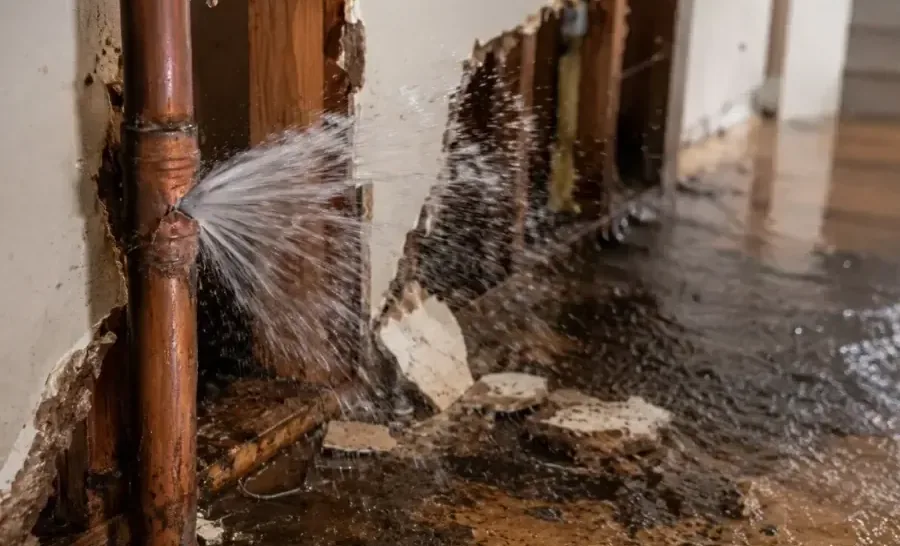
Installing or replacing a water softener in the city takes a plumbing permit, and the city recommends setting a softener to 29 grains per gallon. Those details matter after a leak, because a softener, a washer and a dishwasher all tie into the same supply and drain pipes.
Slow leaks and sudden ones
A cracked supply hose can spray in minutes, while a loose drain connection or a worn door seal drips for weeks. The slow ones often do more damage in the end because the water works under flooring and into cabinet bases where nobody looks.
- Washer hoses and drain connections
- Dishwasher door seals and inlet valves
- Refrigerator ice maker connections
- Softener fittings and drain hoses
Finding what the towel missed
Moisture meters and a thermal camera show how far water traveled under vinyl, laminate and tile. Toe kicks are removed to dry the cabinet bases, and flooring is lifted only where it is wet, since a dry plank can often stay.
Toilet and hidden leaks
The city suggests testing a toilet with food coloring in the tank for 30 minutes, and checking the meter before and after two hours with no water use. Both are quick ways to confirm or rule out a hidden leak before blaming an appliance. A bigger release belongs under burst pipe water damage.