Replacing a water heater in the city needs a plumbing permit, and applications go through the city's SmartGov portal. That means the plumber and the cleanup crew often work around each other in the same utility room.
What a tank leak wets
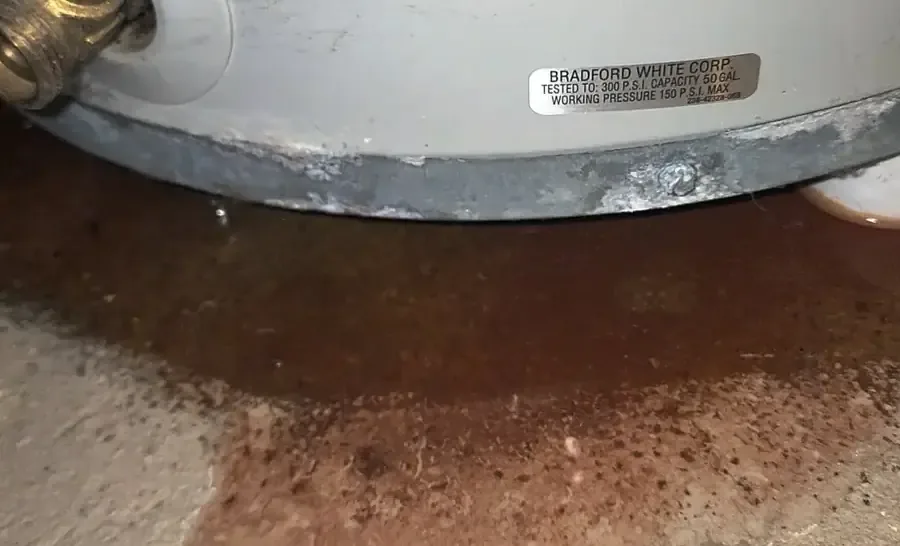
Water from a tank spreads across the floor of a utility room and moves toward drains, doorways and any carpet nearby. It runs along the bottom of walls and wicks into drywall, and rust-colored water can stain flooring if it sits.
- Concrete is extracted and dried with air movers
- Carpet and pad in the next room are lifted if wet
- Drywall bottoms are vented or cut where readings stay high
Anode, sediment and smells
The city says experts recommend flushing a water heater once a year to remove sediment. It also says a rotten egg smell from hot water usually comes from bacteria reacting with sulfur and the tank's sacrificial anode, which a new anode and a higher temperature should fix. Neither is a leak, but both can signal an aging tank worth a plumber's look.
Drying the utility room
Utility rooms are small and often closed, so humidity climbs quickly. Air movers and a dehumidifier run with the door open to the rest of the house so moisture does not drift into finished rooms. The same steps are covered under appliance leak water damage.