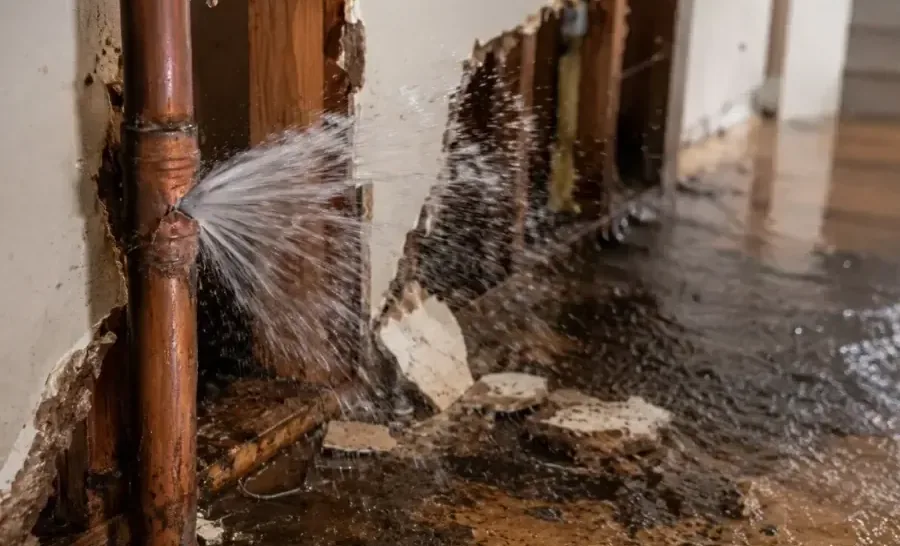
Appliance leaks are quiet. In Victoria, as elsewhere, a cracked hose or loose fitting seeps for days, and the first sign is often a soft floor or a musty smell, not a puddle. Dishwasher and refrigerator hoses are often tucked behind panels, which hides them.
Homes where it happens
The city has 3,789 owner-occupied households, most of them in detached homes, along with 260 renter-occupied homes. Most have a washer, a dishwasher or a refrigerator on a water supply, so a leak is a risk in any house or apartment, whatever its age.
- Source traced and the supply valve closed
- Floors lifted and toe kicks removed where wet
- Cabinet bases and wall bottoms dried
What gets wet behind the scenes
Water from a kitchen or laundry leak travels under vinyl, laminate and tile, into cabinet bases and behind baseboards. A meter and thermal camera show the real footprint, which is typically larger than the visible puddle. Plastic laminate and particleboard swell and often have to go. Hardwood cups, laminate buckles and vinyl bubbles as moisture rises from below.
Slow leaks need patience
A leak that ran for weeks can leave wet subfloor and early mold, so the crew checks cavities thoroughly before closing anything. Odors, staining under a sink or a spongy floor are often the clues. See water heater leak cleanup for tank failures.