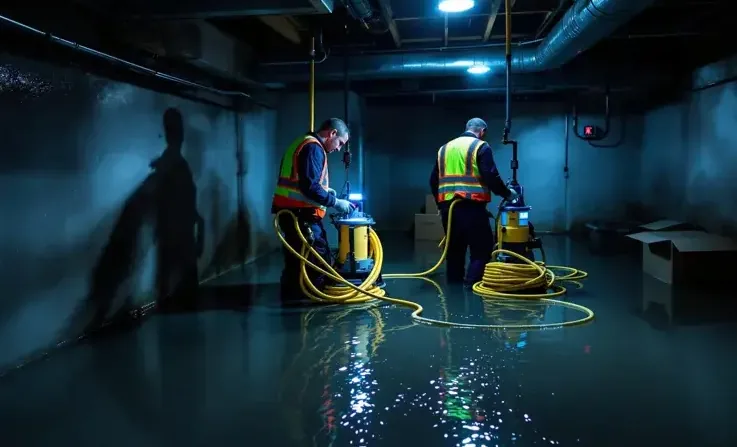
Many Shakopee homes built from the 1990s on have drain tile around the foundation and a sump pit that carries groundwater out. When the pump quits during a thaw or a power outage, that pit becomes the starting point of a flooded lower level.
Key takeaways
- Thaws and power outages are the two moments when a sump pump is most likely to fail or be overwhelmed.
- The pit overflows first, then water spreads across finished floors toward the walls.
- Power safety comes first: stay out of standing water until the circuits to that room are off.
- Cleanup means extraction, removal of wet carpet pad and lower drywall, and measured drying.
- A pump test and a clear discharge before the next thaw prevent most repeat events.
Why thaws and outages are the dangerous moments
A sump pump sits idle for long stretches and then works hard. Two events in particular ask more of it than any other.
Neither event is rare in Minnesota, which is why a pump that has worked for years can still fail on the wrong day.
The spring thaw
When snow melts, groundwater rises around the foundation. Drain tile sends that water to the pit, and the pump has to run for hours.
A pump that is worn, stuck or blocked at the discharge will not keep up.
The power outage
Storms and ice can cut power at the same time groundwater is highest. A pump with no power cannot move anything, and the pit fills in a short time.
Summer thunderstorms can overload drains and window wells in the same way, so the problem is not limited to the thaw.
How to tell a pit overflow from seepage
Where the water appears says a lot about where it came from, and it changes what happens next.
A quick look takes a minute and tells the crew where to start, so it is worth doing before photographs and calls.
- Water at the sump pit cover or spreading outward from the pit points to an overflow
- Damp or wet edges along the walls point to seepage through the foundation
- A pump that hums but does not move water often has a stuck float or a blocked discharge
- A silent pump with a full pit usually means no power or a failed motor
- A sump pit that is dry while the floor is wet points to water entering from somewhere else, such as a window well or a pipe
The first steps in a finished lower level
Newer split-levels, two-stories and townhomes often have finished lower levels, so a pit overflow reaches carpet, pad and drywall quickly.
These steps protect people first, then the house:
- Stay out of standing water until the circuits to that room are off
- If power is available and it is safe, restore the pump or run a temporary one to lower the pit
- Check that the discharge pipe outside is open and not frozen or blocked
- Lift furniture and boxes off wet carpet if it is safe to do so
- Photograph the pit, the water level and every damaged item
- Do not use a household vacuum on standing water
If the water is still rising
If water rises faster than a temporary pump can lower it, stop and wait for help rather than wading in.
A flooded lower level can hide stairs, cords and floor drains.
If the water has stopped
Once the water stops, the next job is removal. The sooner wet carpet pad leaves the room, the less moisture it sends into the walls.
What the cleanup crew does
Sump pump failure cleanup begins by pulling the standing water out. Truck mounted pumps and wet vacuums handle the volume, and the pit is checked so it does not refill the room.
Then basement flooding cleanup removes what cannot be saved and prepares the rest for drying.
The crew also checks the pit, the check valve and the discharge, so the room does not refill while the work goes on.
- Wet carpet and pad are lifted and removed
- Drywall and baseboard are cut back past the wet edge
- Insulation and cabinet toe kicks that wick water are taken out
- Concrete, framing and fixtures are cleaned
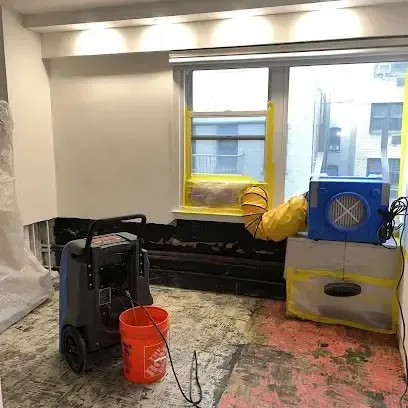
- Air movers and dehumidifiers are set and readings are taken each day
Why pad and drywall go first
Pad acts like a sponge against the slab, and drywall wicks water upward.
Both hold moisture against framing, so removing them early shortens the drying that follows.
Window wells and drains in summer storms
Thaws and outages are not the only problems. Summer thunderstorms can overload drains and window wells, and water finds the lower level through them.
A sump pump is built to move groundwater collected by the drain tile. Water coming in through a window well is a separate path and needs a separate fix.
- Keep window well covers clear and the drains clear of leaves
- Extend downspouts so roof water leaves the foundation
- Check that the yard slopes away from the house
- Look at floor drains after a storm to confirm they still carry water
Why a dry looking floor can still hold water
Water hides under flooring and inside wall bays. A surface that feels fine can sit on a wet bottom plate or a damp slab.
That is why moisture readings, not the look or feel of a wall, decide when drying is finished.
Damp materials can start growing mold within 24 to 48 hours, so a lower level is dried as soon as the standing water is out.
Checking the pump before the next thaw
A few minutes of testing before the thaw can prevent a flooded lower level. The sump pump readiness check walks through the main points.
The same checks work before a summer storm season.
- Pour water into the pit and watch the float lift and the pump run
- Look for a clear, open discharge pipe outside
- Listen for a motor that grinds or a switch that sticks
- Think about a battery backup for the days the power fails
- Clear the pit of debris and keep the cover on
Questions
Why do sump pumps fail during a thaw?
Melting snow raises groundwater around the foundation, so the pump has to run for hours. A worn pump, a stuck float or a blocked discharge cannot keep up.
What should be done first when a pit overflows?
Stay out of standing water until the circuits to that room are off, restore pumping if it is safe, check the discharge, and photograph the water and the damage.
Does a power outage always mean a flooded lower level?
No. It depends on how much groundwater is arriving. When groundwater is high, a pump with no power cannot move water and the pit can fill quickly.
What gets removed after a pit overflow?
Wet carpet and pad, drywall and baseboard that the water reached, and insulation that wicks water. Concrete and framing are cleaned and dried.
How is a lower level dried after a pump failure?
Air movers and dehumidifiers run while moisture readings are taken each day, and the equipment stays until the framing and slab read normal.
Can a sump pump fail in summer too?
Yes. Summer thunderstorms can overload drains and window wells, and a storm power outage stops the pump at the same time groundwater is high.