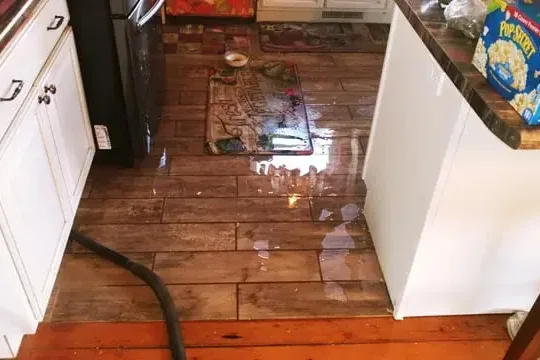
Eden Prairie sits on the north bank of the Minnesota River, with Purgatory Creek and Riley Creek draining to it. When creek or storm water reaches a building, pulling the standing water out is the first job, ahead of any drying equipment.
Key takeaways
- Extraction comes first because water left in place keeps wicking into pad, drywall and framing.
- Creek and storm water comes from outside, so it is treated as contaminated and porous materials it touched are removed.
- Road cutting floods have hit near Purgatory Creek, Duck Lake and the Minnesota River, and the city recalled six flood events in the five years before 2019.
- The hail and heavy rain of July 27 and 28, 2025 show that storms can bring water in summer as well as spring.
- Photographs of the high water mark and damaged items, taken before cleanup, help later decisions.
Why outside water is not like a pipe leak
A pipe leak starts with clean water from a supply pipe. Creek and storm water starts with runoff, soil and whatever it passed on the way.
That difference sets the rules. The water is treated as contaminated, so the cleanup is stricter about which materials stay.
- Carpet and pad that outside water reached are removed
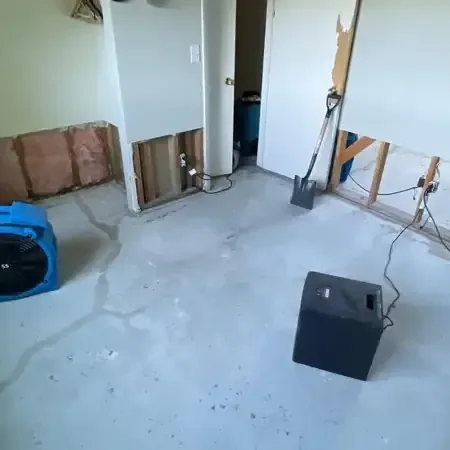
- Drywall and insulation wet by the water are cut out
- Hard surfaces are cleaned and disinfected
- Framing and slabs are dried once the contaminated material is gone
What recent events show about water here
Creek and river water has cut off roads in Eden Prairie more than once, and the city and its watershed districts say storms in Minnesota are more frequent and more intense than they used to be.
A few dated events show the pattern:
- In 2014, floods from Purgatory Creek and Duck Lake washed away three culverts on Duck Lake Trail and Duck Lake Road, and the Minnesota River flooded Riverview Road and washed out its culvert
- In May 2018, high water overwhelmed the Riverview Road culvert again, and the city later replaced it with a bridge structure
- In March and April 2019, melting snow, ice jams and rainstorms raised the Minnesota River and closed a stretch of Riverview Road near Hennepin Town Road, which reopened for 72 hours and then closed again
- On the night of July 27, 2025, hail and heavy rain hit, followed by strong winds and more rain on July 28
What the July 2025 storms did and did not do
After the hail and heavy rain on July 27, 2025, strong winds knocked down trees and branches that blocked some roads and trails, and city crews cleared debris on Edenvale Boulevard between Birch Island and Indian Chief roads.
The National Weather Service had a severe thunderstorm watch with derecho warnings for much of Minnesota, and the local report said there was no major damage.
That is a useful reminder. Most storms pass without a flooded room, but a single downpour can still overwhelm a window well or a failed sump pump, and the first day decides how much gets wet.
For the other services that follow a storm, the water damage services for Eden Prairie homes are laid out in one place, and the water extraction overview explains the equipment in plain terms.
Why extraction comes first
Extraction is the step that turns a flooded room into a damp one. Until the standing water is gone, nothing else can start.
Standing water keeps spreading
Water does not stay where it landed. It wicks up drywall, soaks carpet pad and works into the bottoms of walls.
Water extraction pulls it out with pumps and wet vacuums before it travels further.
Contaminated water sets the order of work
Because creek and storm water is contaminated, the crew removes porous materials soon after extraction, not after days of drying.
Drying equipment goes in only when the damaged material is out, so it is not forced to dry something that will be thrown away.
How a downpour finds a way indoors
Heavy rain does not need a river to cause trouble. It can reach the inside of a building through several routes at once.
Any one of these can leave standing water that needs extraction before drying starts, and the water extraction crew works the same way for each.
- A window well that fills faster than it drains
- A floor drain that backs up when storm drains are full
- A sump pump that fails or loses power during the storm
- Water running along a foundation wall and seeping through a joint
- A roof or gutter overflow that sends water down a wall
First steps at home
A few steps protect people and keep options open while help is on the way.
- Stay out of rooms with water near outlets, cords or appliances until the power is off
- Do not wade through the water; it may be contaminated
- Photograph the high water mark and every damaged item before moving anything
- Lift small belongings and papers above the water if it is safe to do so
- Skip household vacuums, which are not made for wet debris
- Write down when the water came in and when it began to fall
After extraction: removal and drying
Once standing water is out, the crew removes the materials that cannot be saved and cleans what stays. Flood water cleanup then moves to drying.
Air movers and dehumidifiers pull moisture out of framing and floors, and moisture readings tell the team when the structure is back to normal.
Damp materials can start growing mold within 24 to 48 hours, so drying begins as soon as the removal is finished.
Where the water comes from
Riley Creek flows all year from groundwater and lake outflow, and the Metropolitan Council notes that high flows can cause flooding and erosion. Purgatory Creek and Riley Creek both drain to the Minnesota River.
The main flood trouble spots are the Minnesota River near Hennepin Town Road and Purgatory Creek near Duck Lake.
In 2019 the city's public works director recalled six flood events in the previous five years that cut off areas of roads.
The city works with its watershed districts on rules that limit building on flood plains, while the city handles most stormwater management itself.
Questions
Why is standing water removed before drying equipment is set up?
Water left in place keeps wicking into pad, drywall and framing. Pulling it out first limits how far the damage spreads and shortens the drying that follows.
Is creek or storm water treated as contaminated?
Yes. Water that came from outside carries runoff and soil, so porous materials it touched are removed and surfaces that stay are cleaned and disinfected.
Which parts of Eden Prairie have had flood trouble?
The main trouble spots are the Minnesota River near Hennepin Town Road and Purgatory Creek near Duck Lake. Road closures and culvert washouts are the confirmed effects.
What happened on July 27 and 28, 2025?
Hail and heavy rain hit on Sunday night, then strong winds and more rain followed on Monday evening. Trees and branches blocked some roads and trails, and the local report said there was no major damage.
What should be photographed after water gets in?
The high water mark on walls, each affected room and every damaged item, all before anything is moved or thrown away.