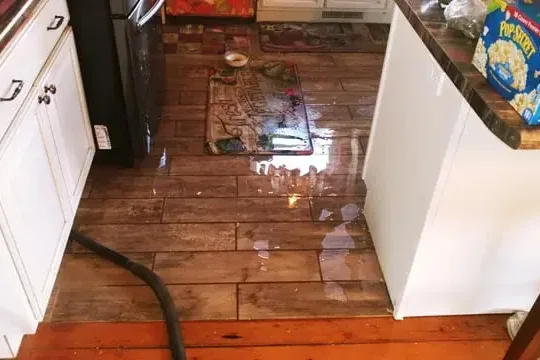
Extraction is the first move on almost every water loss, because the longer water sits, the deeper it moves into padding, drywall and framing. The crew pulls the bulk water out first, then measures what is left behind and records the starting water level for the file.
What the crew checks first
Before any equipment starts, the extraction crew reads the water: where it came from, how deep it stands and whether it picked up soil or sewage on the way. That answer sets the method, the protective gear and whether carpet can be floated or has to go.
- Source and category of the water
- Depth and the rooms it has reached
- Padding, subfloor and wall bottoms that wicked it up
How standing water comes out
Truck-mounted units handle large volumes, submersible pumps clear deep water, and wand tools work carpet and hard floors. Work moves from the deepest water toward the edges, so pumps and suction never fight a rising puddle. Padding that soaked through is lifted or removed, since it holds water long after the surface looks dry.
Storm and creek events
Water in this part of Hennepin County does not come only from plumbing. Purgatory Creek near Duck Lake and the Minnesota River along Riverview Road have both cut off roads in past events, so extraction work here follows storms and floods as much as it follows leaks, and crews plan for mud and debris as well.
After the water is out
Removal is only half the job. Moisture meters and a thermal camera show where the water traveled, and that map sets how many air movers and dehumidifiers go in. Daily visits repeat the readings, so a damp pocket the first pass missed shows up early. Structural drying takes over from there.