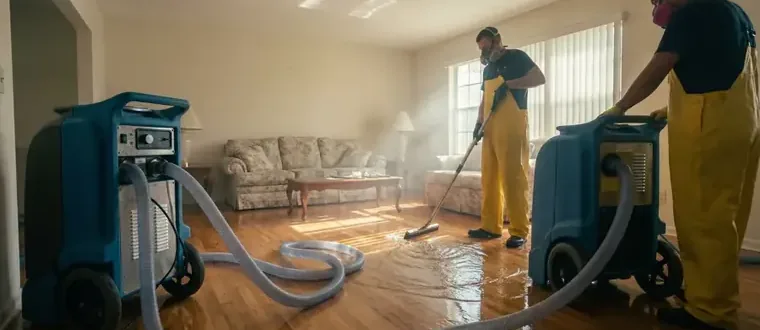
Pulling water out is only the start. Drywall, framing, subfloors and hardwood hold moisture that no pump can reach, and structural drying uses controlled airflow and dehumidification to bring those materials back to their normal moisture content.
Matching equipment to the loss
Class 1 and 2 losses, where water touched part of a room, need a few air movers and one LGR dehumidifier. Several rooms call for more units, and Class 4 losses in dense materials use desiccant drying, heat or hardwood mats.
Readings, not guesses
Each visit the drying team takes moisture content readings from the materials and temperature and humidity readings from the air. Those psychrometric logs show whether the equipment is working or needs to move. If a reading stalls, units are repositioned or the plan changes, so nothing runs on autopilot.
- Moisture content in drywall, framing and floors
- Air temperature and relative humidity
- A dry reference reading from an unaffected area
After any kind of loss
The same drying follows storm water, a burst pipe, a sump pump failure or a roof leak, because the structure does not care where the water came from. What changes is the scope of removal ahead of it, and no drying time is promised in advance since each building reads differently.
When the equipment leaves
Equipment comes out only when final readings match dry reference spots. A written log goes into the claim file, and water extraction is the step that comes first.