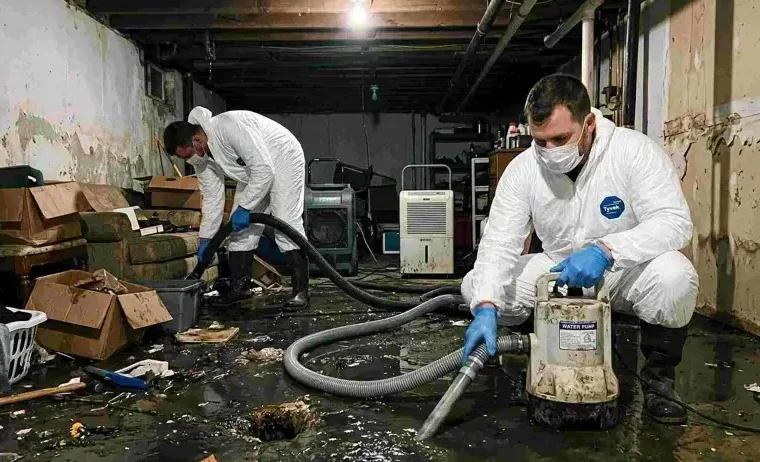
Sewage is different from every other water loss, because it carries bacteria and viruses that move into whatever it soaks. The crew treats the whole space as contaminated until the removal and disinfection are finished.
Where the system sits
The city maintains its own sanitary sewer system, which includes 23 sewage lift stations, while regional trunk sewers are run by Metropolitan Council Environmental Services. The Willow Creek Road neighborhood is different, since its homes use private wells and septic systems rather than city sewer.
- Plumbing repairs need a city permit, so the plumber handles that step
- Septic systems can back up too, and the cleanup method is the same
- The crew documents the cause but does not repair the pipe
Why gear and speed matter
Contaminated water spreads through carpet fibers and wall bottoms, so the longer it sits, the more material has to be removed. Crew members wear suits, gloves and respirators, and nobody else should enter the sealed area until disinfection is complete.
What the cleanup removes
Porous materials that touched contaminated water cannot be cleaned, only replaced. Carpet, pad and low drywall are bagged and removed, and hard surfaces are scrubbed and disinfected.
Clearing the air and drying
A HEPA air scrubber runs during removal to catch airborne particles, and framing is treated with an EPA-registered disinfectant before air movers start. Structural drying then finishes the job, and final readings confirm dry materials before anything is rebuilt.