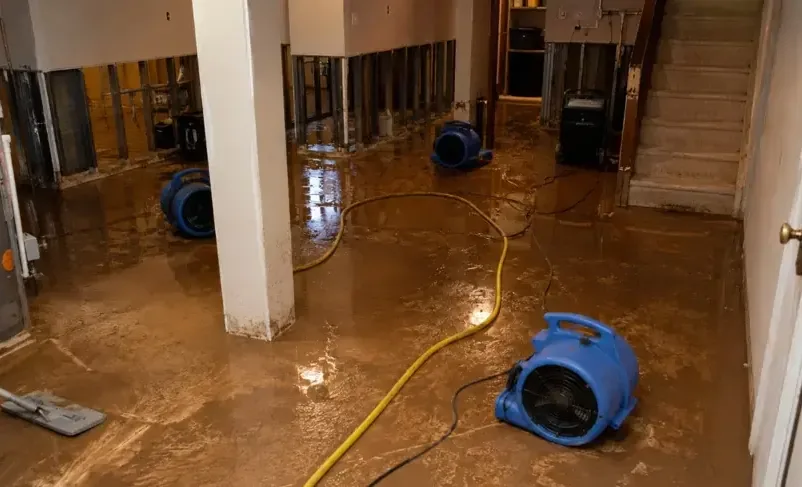
Lower level water removal

Basement Flooding Cleanup in Eden Prairie, MN

After heavy rain, water can collect on the lowest level of a home in a hurry. The cleanup crew pumps it out, strips what is wet and dries walls and floors until the readings finish the job.

(888) 432-4933Ask a crew about your flooded lower level
Pump-out and extraction Flood cuts above the wet zone Daily moisture readings
Eden Prairie basement flooding: standing water across a finished floor
Common causesStorm runoff, pump failure
ScopePump-out through framing
ContentsPhotographed, then moved
FinishLogged dry readings
Right now

First steps for basement flooding cleanup

  1. Power off first

    Leave the panel alone if the floor is wet, and shut circuits off from a dry spot.

  2. Stop new water

    Close the main valve if a pipe is the cause, and note whether rain or a pump was involved.

  3. Photograph the level

    Take pictures of water depth, furniture and walls before anything moves.

  4. Raise stored items

    Lift boxes and electronics onto dry shelves.

Trade facts
Water categoryRain and runoff, sometimes gray
What comes outWet pad, carpet and lower drywall
FramingDried in place and read daily
FinishDry goals met, then written up
The standard

How basement flooding cleanup is held to the drying standard

Rapid local response

Active water is treated as urgent at any hour, because it keeps wicking into drywall, pad and framing after dark.

IICRC S500 drying standard

Structural drying, not just surface drying, with equipment sized to the class of the loss.

Claim-ready documentation

A moisture map, daily psychrometric readings and timestamped photos taken before any demolition.

Cold-climate know-how

Basements, frozen pipes, ice dams and spring thaw water are everyday work in the Minnesota River valley.

Typical cost ranges

What does basement flooding cleanup cost in Eden Prairie, MN?

A flooded lower level here typically costs $2,500 to $12,000 or more, and the spread comes from the finish level, how much drywall comes out and whether the water was clean, gray or contaminated.

Unfinished or partly finished

$2,500 to $4,500
  • Pump-out and extraction
  • Concrete and wall drying
  • Daily readings

Finished lower level

$4,500 to $8,500
  • Carpet, pad and flood cuts
  • Insulation out on outside walls
  • Framing dried

Contaminated or whole level

$8,500 to $12,000+
  • Category 3 removal
  • Containment and antimicrobial
  • Extended drying

Ranges are typical, not a quote. The water category, the square footage that got wet, the material class and how fast drying started move the number most. For a planning range, run the water damage cost calculator.

The process

The basement flooding cleanup process, in order

The order matters: moisture mapping comes before equipment, and equipment stays until the readings say dry, not until it looks dry.

  1. 01

    Pump out

    Submersible pumps and extraction units clear standing water first.

  2. 02

    Strip the wet

    Soaked flooring, pad and drywall come out above the water mark.

  3. 03

    Dry and dehumidify

    Air movers and dehumidifiers run through walls, framing and floors, with cold rooms warmed.

  4. 04

    Verify

    Final readings are compared against dry materials before equipment leaves.

A flooded lower level is a race between the water and the materials it touches. Carpet, padding, drywall and insulation all take on moisture quickly, and the cleanup crew works from the standing water down to the framing.

Storms that fill a lower level

Hail and heavy rain on July 27, 2025, along with the creek and lake floods of 2014, show how quickly water can build up after a storm in this city. No two floods look alike, so the crew reads each lower level on its own: where the water entered, how deep it got and what it soaked.

What gets removed

Every porous material that stayed wet is judged on the spot. Clean water caught early may leave the carpet in place, while storm or sewer water sends carpet, padding and the lower drywall to disposal. Anything that cannot dry in place is bagged, counted and photographed so the claim file stays complete.

  • Pump-out and extraction of all standing water
  • Wet padding, baseboard and drywall cut away above the wet zone
  • Insulation removed where it holds water in outside walls

Contents, stored items and the claim

Boxes, electronics and furniture on the lowest level are photographed before they move, and the crew lists what the water reached. That list, the water depth and the readings travel together into the file an adjuster opens later.

Drying everything left

Air movers and dehumidifiers go in after the demolition, not before, so they work on material that can actually dry. Cold lower rooms are warmed so the equipment can pull moisture out of the air. Readings from walls, framing and floors come back every visit, and equipment stays until structural drying reaches its goal.

Service area

Basement flooding cleanup across Eden Prairie and nearby towns

Service area map

Lower level cleanup covers homes across the city, from the Hidden Ponds and Columbine Townhomes areas to Bearpath, The Preserve and the quieter streets near Staring Lake Park and Round Lake Park, plus townhome and apartment buildings.

The same service nearby: basement flooding cleanup in Shakopee, Chanhassen, Chaska.

Water damage restoration in Eden Prairie · every town covered

Questions

Basement Flooding Cleanup questions in Eden Prairie, MN

Can the carpet be saved after a flood?

Sometimes. Carpet soaked by clean water can be lifted and floated if the crew acts early, but storm or sewer water means carpet and padding are removed and disposed of.

How long does a lower level take to dry?

Drying time depends on the materials, the water category and how long they sat wet, so the crew reads the structure each visit instead of promising a set number of days.

Do wet walls always have to be cut open?

No. Moisture readings decide that. Walls are opened above the wet zone only where insulation or drywall holds water that air alone cannot reach.

What if rain keeps coming back?

Heavy rain events can repeat, so the crew notes how the water entered and passes that on, while any repair to drainage or a sump pump belongs to a plumber or drainage contractor.

Does a lower level flood need an adjuster?

Photos, readings and a written scope make a claim easier to follow. Sump pump failure cleanup describes one common cause and its paperwork.

24/7 water removal

Stop the spread on the lowest level

Dispatch runs day and night, so a heavy storm that sends water in after dark still reaches a crew that can start the plan.

(888) 432-4933Call about the flooded level
Call (888) 432-4933 24/7