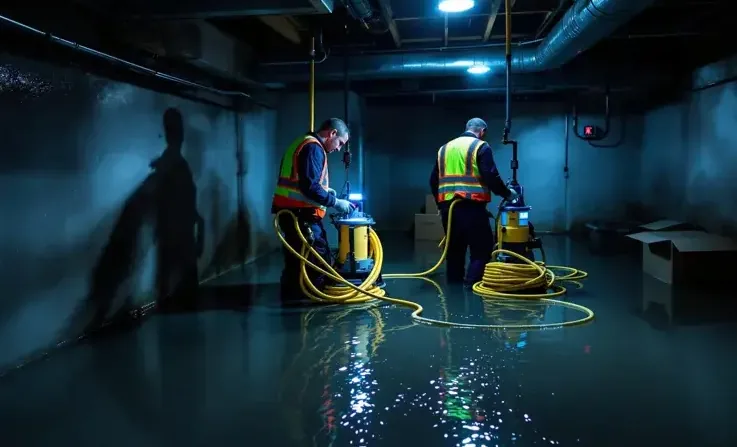
A sump pump sits quiet for months, then carries the whole load when storms or snowmelt arrive. If it fails at that moment, water spreads from the pit across the floor and into whatever is stored or finished nearby.
When the pump matters most
Events like the hail and heavy rain of July 2025 and the spring Minnesota River high water in 2019 are the times a pump works hardest. The crew does not judge the pump itself, only the water it left behind and the materials that soaked.
What the cleanup involves
Water that came from the ground and the pit is treated as gray at best, since it can carry soil and bacteria. Soaked padding and low drywall usually come out, and framing is treated before it is dried.
- Extraction of everything standing, including pit overflow
- Removal of soaked carpet, pad and lower drywall
- Antimicrobial on exposed framing before drying begins
Documenting the failure
Photos of the pit, the water level and the affected rooms go into the file, along with moisture readings. The adjuster sees what happened, while any question about the pump itself stays with the plumber.
Getting the rooms dry
Once the wet materials are out, air movers and dehumidifiers run until readings match dry reference spots. A replacement pump is a plumbing task, so the crew keeps its own work to water removal and structural drying.