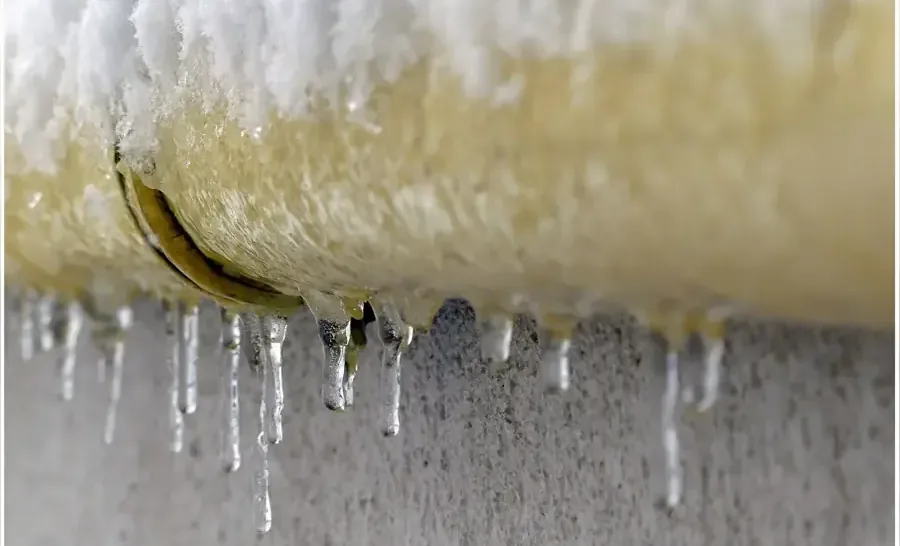
Fall is the time to prepare for a freeze, because a frozen water service pipe in Prior Lake can go from cold to split in a single hard stretch of weather. The city offers specific advice, and most of it takes only a few minutes to follow.
Key takeaways
- The city says the water service enters most homes in the basement through the floor, near the water meter.
- Keep the furnace above 55 degrees Fahrenheit, open cabinet doors, and wrap foam insulation around exposed pipes.
- Point the furnace cold air return away from the water service.
- In extreme cold, kitchen faucet water below 40 degrees Fahrenheit means frost may be near the service pipe.
- A pencil wide stream of cold water helps prevent freezing, and the city says it uses roughly 700 to 1,000 gallons per day.
Why the water service pipe is at risk
Minnesota winters put water service pipes at risk, and the city says the risk is greater with longer stretches of extreme cold.
The service pipe enters most homes through the basement floor, near the water meter. That is where frost can reach it.
A frozen pipe has not always burst. The ice blocks the water, and the split comes when pressure builds behind it or when the thaw begins.
- A long cold stretch lets frost go deeper than a short snap does
- A cold air return pointed at the service pipe pulls cold air across it
- An unheated or poorly heated basement corner makes it worse
Why the meter area matters
The meter sits where the service pipe comes through the floor, so it is where cold from outside meets the house.
A gap, a draft or a cold air return in that area gives frost an easy path to the pipe.
Fall prep: steps before the freeze
The city lists several steps that cost little and take little time. Doing them in October is easier than doing them in January.
- Keep the furnace above 55 degrees Fahrenheit
- Open cabinet doors under sinks on outside walls so warm air reaches the pipes
- Wrap foam insulation around exposed pipes
- Point the furnace cold air return away from the water service
- Find the main water shutoff and make sure it turns
- Check the area around the meter for drafts and seal any gaps
Small habits for the coldest nights
On the coldest nights, keep interior doors open so warm air moves through the house.
Keep the garage door closed if any pipes run along that wall.
If the house will be empty
Before a winter trip, keep the furnace above 55 degrees Fahrenheit, as the city advises, and ask someone to check the house while you are away.
Warning signs in extreme cold
In a stretch of extreme cold the city gives a simple test. If the kitchen faucet water temperature falls below 40 degrees Fahrenheit, frost may be near the service pipe.
The pencil wide stream
The city says a steady cold water stream about one quarter inch wide, roughly the width of a pencil, helps prevent freezing.
It also notes that the stream uses roughly 700 to 1,000 gallons per day, so it is a short term measure for the coldest stretch.
Other signs to watch
A drop in water pressure, a faucet that sputters or a pipe that feels very cold are all signs that ice may be forming.
Frost on a visible pipe or a toilet that refills slowly are other clues that cold has reached the plumbing.
If a pipe has frozen: the first steps
A frozen pipe has not yet leaked, but it can split when it thaws or when pressure builds behind the ice. Frozen pipe water damage is often avoidable if the steps start early.
- Open the faucet served by the frozen pipe so water can flow as it thaws
- Use a hair dryer or warm air on the cold section, working toward the faucet; never use an open flame
- Close the main shutoff if you see any leak or bulge
- Keep the heat on and open the cabinet doors
- Call a plumber if the pipe does not thaw or if it has already split
- Leave the faucet open until water runs normally, then check the pipe for drips
If a pipe has burst: what the cleanup involves
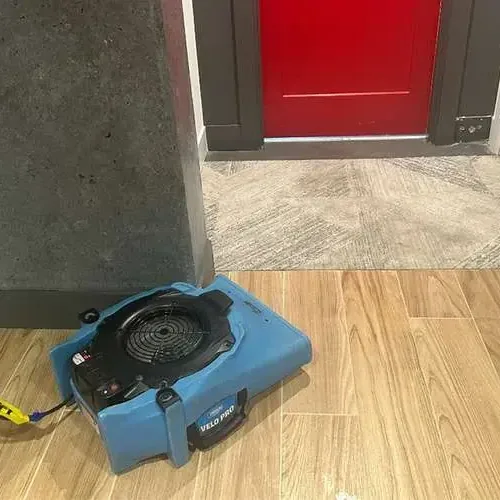
A split pipe often shows itself only when the ice melts and water flows. Burst pipe water damage cleanup starts with stopping the water, then extraction and drying.
The size of the job depends on how long the pipe ran before it was found. A split found early wets a small area, and one found late can reach several rooms.
- Close the main water valve and open the lowest faucet to drain the pipes
- Extract standing water and lift wet carpet and pad
- Cut back wet drywall to the first dry stud
- Dry framing and subfloor with air movers and dehumidifiers
- Take readings until the structure is back to normal
Who to call, and in what order
A frozen or split pipe involves two kinds of help, and they do not overlap.
The plumber handles the pipe. The cleanup crew handles the water and the wet materials.
- Close the main shutoff first, to stop water from flowing
- Call a plumber to thaw or repair the pipe
- Call a cleanup crew if any water has reached floors or walls
- Photograph the pipe, the split and the wet areas before anything is moved
- Keep the receipts for repairs and for any equipment that was rented or bought
Why drying cannot wait
Damp materials can start growing mold within 24 to 48 hours, so drying starts as soon as the water is under control.
A pipe that cracked in the cold can leak slowly for hours before anyone sees it. Moisture readings in the walls near the pipe show whether water traveled.
The frozen pipe overview explains how a pipe that cracked in the cold shows up on thaw.
Questions
Where does the water service enter most homes in Prior Lake?
The city says it enters most homes in the basement through the floor, near the water meter.
What does the city suggest in extreme cold?
Keep the furnace above 55 degrees Fahrenheit, open cabinet doors, wrap foam insulation around exposed pipes, and point the furnace cold air return away from the water service.
What does cold faucet water mean?
In extreme cold, kitchen faucet water below 40 degrees Fahrenheit means frost may be near the service pipe.
How much water does a pencil wide stream use?
The city says roughly 700 to 1,000 gallons per day, so it is meant as a short term measure for extreme cold.
What should be done first if a pipe splits?
Close the main water valve, open the lowest faucet, stay out of standing water near electrical equipment, and start extraction and drying as soon as possible.
Is it safe to thaw a frozen pipe with a heat source?
Warm air from a hair dryer, moved toward the faucet, is the safer route. An open flame is not, because it can damage the pipe or start a fire.