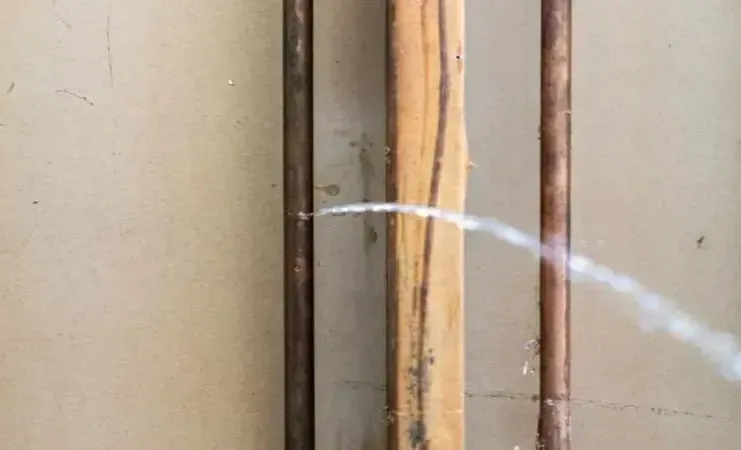
A burst pipe is the one water loss where the source keeps feeding the damage until someone closes a valve. Finding that valve is the first and most important move.
Find the valve first
City information puts the water service entry in the basement, close to the meter, so the main shutoff tends to sit in the lower level. Knowing where it sits before an emergency saves a great deal of damage. A stiff shutoff valve should be turned once a year so it works when it is needed.
Two kinds of broken pipe
A pipe inside the house is a homeowner's emergency, while a city main is a neighborhood event. In February 2019 a six-inch main on Green Heights Trail broke and sent water into nearby streets and basements. Cleanup after either one follows the same water-first plan.
- Wall cavities where water runs down the studs
- Ceilings below an upstairs pipe
- Cabinet toe kicks and flooring edges
Drying what the water reached
Water from a burst pipe is clean at first, so many materials can be dried instead of replaced. Meters and a thermal camera find the wet spots, and cabinet toe kicks and wall bottoms are opened so air reaches the cavities. Carpet pad, hardwood and cabinets that stayed wet for a long time are a different case, and parts of them may need to come out rather than dry.