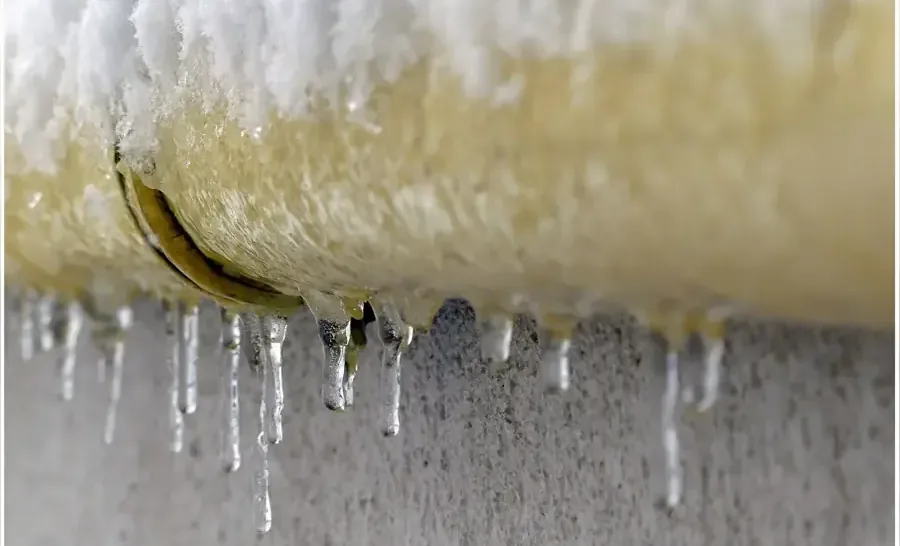
A frozen pipe often shows no leak while it is solid. The damage begins when the ice melts and water runs through the split into the wall, ceiling or floor.
What the city advises
The city advises keeping the furnace above 55 degrees Fahrenheit, opening cabinet doors, wrapping foam insulation around exposed pipes and pointing the furnace cold air return away from the water service. In extreme cold, it says kitchen faucet water below 40 degrees can mean frost is near the service pipe.
- A steady cold stream about as wide as a pencil helps prevent freezing
- That stream uses roughly 700 to 1,000 gallons a day
- Foam insulation on exposed pipes near cold walls
After the pipe splits
Shut off the water at the main valve, near the meter in most basements, and open faucets to drain the pipes. The crew then extracts the water and opens the wet cavity, and ceiling drywall may come down where water collected above it. A pipe that looks fine afterward still deserves a check, because a section that froze once can hold a hairline split that only shows under pressure.
Drying two levels
Water from an upstairs pipe often drips into the floor below, so drying covers the cavity, the ceiling and the room under it. Air movers and dehumidifiers run until readings match dry materials. Wet insulation is removed, since it traps water against framing, while solid framing and subfloor are dried in place with air movers and heat.