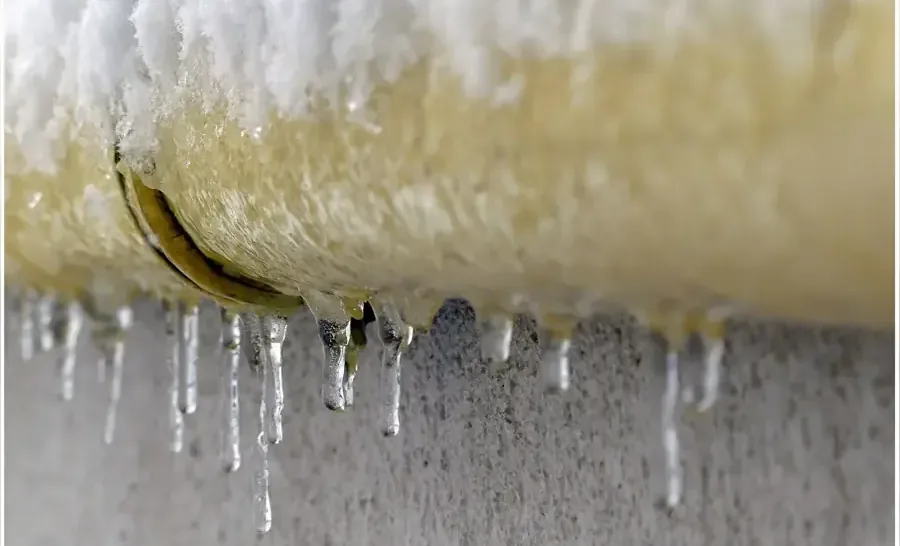
Ice can swell inside a pipe until it cracks the metal or plastic, but the leak waits for the thaw. By the time a drip turns into a flood, water may already be inside a wall or ceiling.
Cold snap basics
Regional Minnesota advice is to insulate pipes in unheated attics and garages and to keep a faucet dripping during a hard freeze. That is general winter advice rather than a record of any one local event, but it explains where thaw leaks tend to start.
Where thaw leaks hide
Pipes in outside walls, attics and garages freeze first, but the water often drains toward the lowest point it can find. A stain on a ceiling or a damp baseboard may sit far from the actual split, which is why the crew follows readings instead of guessing.
What the cleanup does
Water is extracted first, then the crew opens the wall or ceiling cavity along the pipe run so wet insulation can come out and the framing can dry. Ceiling drywall below the leak is checked as well.
- Extraction from floors, ceilings and cavities
- Insulation removed where it holds water
- Carpet and pad checked on the level below
Drying more than one level
Thaw water drips through ceilings, so drying often has to cover two levels at once. The drying team places air movers and dehumidifiers on both, and structural drying readings decide when the equipment can leave.