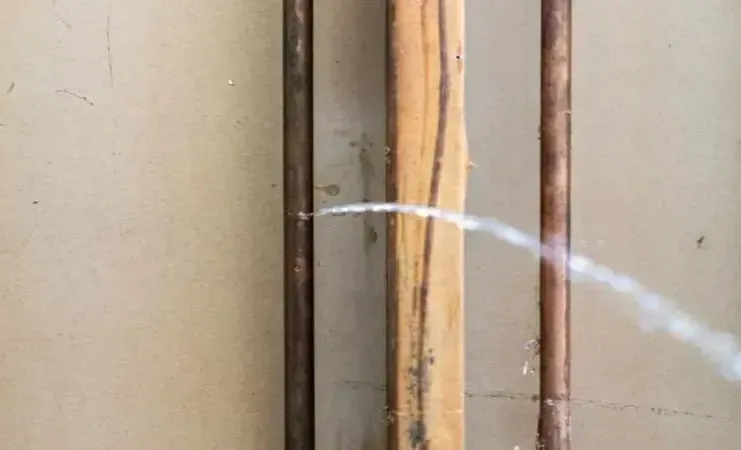
Supply pipes run under pressure, so a failure keeps pushing water into walls, floors and ceilings until the valve is closed. The crew meets a space that is already soaking and works to stop the damage from traveling further.
A city that grew fast
The city grew from about 2,000 residents in 1960 to more than 60,000 about fifty years later, and its public water system began in the early 1970s. Homes from many building periods now stand side by side, so the crew looks at what is actually in the wall instead of assuming how a house was built.
What the crew opens
Water follows gravity and framing, so it often turns up far from the burst. The crew opens the ceiling below and the bottoms of nearby walls, then removes wet insulation and soaked flooring.
- Ceiling drywall below the leak
- Wall bottoms vented or cut
- Cabinet toe kicks and flooring edges
Caught early or long-running
A pipe that bursts while someone is home usually wets one room, but a slow pinhole or a burst in an empty house can run for days. The longer it runs, the more rooms, cabinets and subfloor need removal, and the longer drying takes.
Drying and proof
Air movers and dehumidifiers go on every wet level, with readings logged each visit. Structural drying ends only when the numbers match dry reference spots, and the plumber's repair record sits beside the drying log for the adjuster.