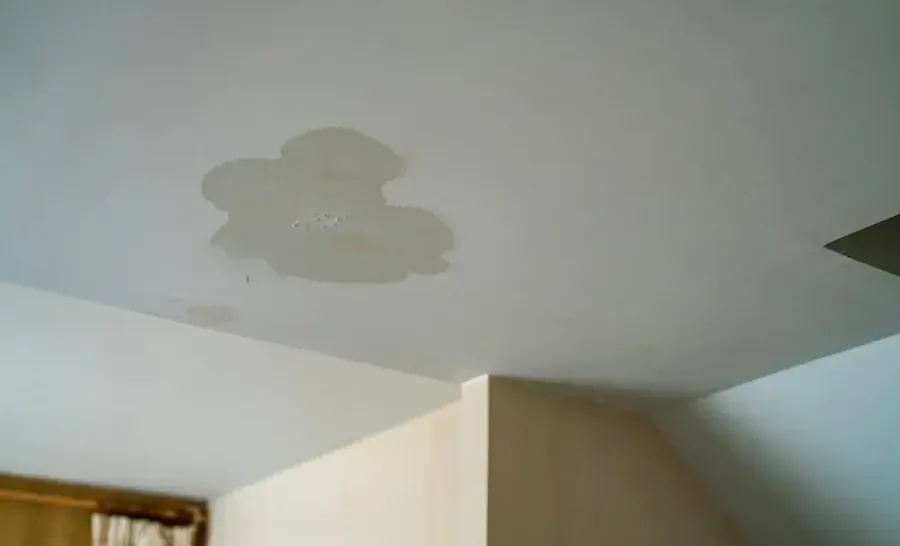
Water rarely stays where it enters. It runs along joists, soaks insulation and pools above the drywall until the ceiling stains, sags or drips, by which time the wet area is usually larger than the stain.
Storm nights and roofs
A storm night such as July 27 to 28, 2025, with hail, heavy rain and wind, is the kind of weather that tests a roof. The local report found no major damage, so no roof claim is made here, only the cleanup if a leak follows.
What gets opened
Drywall that is sagging, bubbled or soft is cut out so the wet insulation above can be removed and the joists can dry. Small access holes may be enough for a minor stain.
- Access holes cut to read each ceiling bay
- Wet insulation removed above the drywall
- Joists and subfloor dried in place
If the source is plumbing
A supply or drain leak from an upstairs bathroom or kitchen sends clean or gray water through the ceiling. The plumber repairs the pipe, while the crew handles the extraction and drying below, as in burst pipe water damage.
Drying the space
Air movers and dehumidifiers go in once the wet materials are out, and readings are repeated each visit until the bay, joists and floor are dry. A ceiling is patched only after the numbers match dry spots.