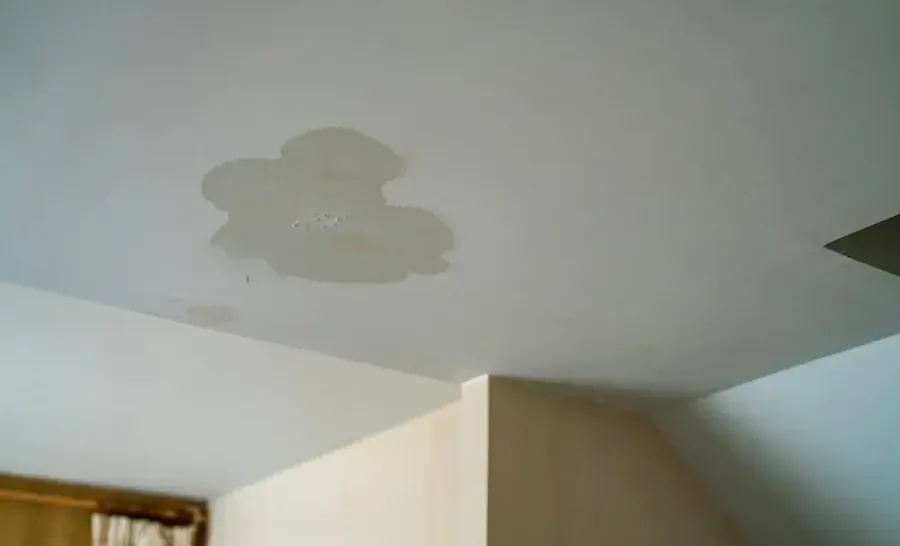
A ceiling stain is only the part of the leak that reached the drywall. Behind it, insulation, framing and sometimes the floor of the room above have been wet for longer than the stain suggests.
Finding where it comes from
A leak from above can start at a roof edge, a supply pipe, a drain or a fixture such as a tub or toilet. The stain's position does not always match the source, because water travels along joists before it drips. Bathrooms above a ceiling are common culprits, since a failed seal or a slow drain can leak for weeks without a drip showing below.
- Roof or flashing leaks after storms
- Supply and drain pipes in the floor above
- Tubs, showers and toilets that overflow or seep
Opening the ceiling safely
A bulging ceiling is holding water and can fall, so a small hole releases it into a bucket. The crew cuts access holes to check the cavity, removes drywall that is soaked or sagging and leaves dry sections in place.
Drying the bay
Insulation that stayed wet usually comes out, since it holds water against the ceiling and framing. Air movers and a dehumidifier dry the joists and the subfloor above, and the crew checks the wall bottoms and floor below for water that ran down. Painting over a damp ceiling locks the moisture in, so patching waits until readings are normal.